King cobra isn’t just one snake! Scientists reveal four hidden species across Asia |
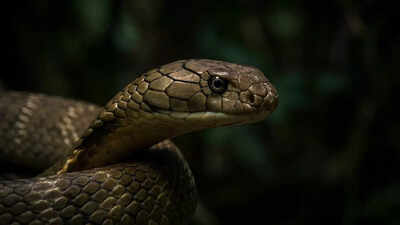
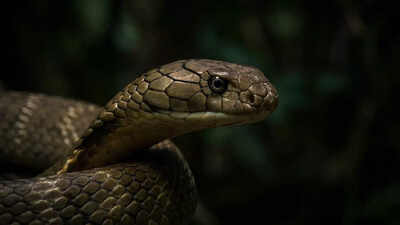
For nearly 200 years, everyone thought the king cobra was just one species, stretching across South and Southeast Asia. That seems to be changing. The study suggests it’s actually four different species, each evolving on its own in separate regions. So the snake you might see in India could be very different from the one in the Philippines. Scientists studied genetics, body patterns, teeth, and even old specimens to figure this out. They apparently took their time, checking historical records and carefully assigning names.
King Cobra: Size, venom, and surprising behaviour
The king cobra is famous for its size. It can grow up to 5.5 metres. Scary, yes. But it’s more than just length. It’s highly venomous, hunting other snakes, even small mammals. The name Ophiophagus hannah means “snake-eater.” Fits perfectly. They’re shy mostly, despite the scary hood. Experts say you’ll often see them retreat if disturbed, though they can strike fast when provoked. The species was first described in 1836 by Theodore Cantor. Over time, scientists noticed variations with different band patterns, head shapes, and behaviour depending on where the snake lived.
King Cobra species
The study separates king cobras into four species. Northern king cobra (O. hannah) covers parts of India, Pakistan, and central Thailand. Sunda king cobra (O. bungarus) is in the Malay Peninsula, the Greater Sunda Islands, and the southern Philippines. Western Ghats king cobra (O. kaalinga) is local to India’s Western Ghats. Luzon king cobra (O. salvatana) lives only on Luzon Island in the Philippines. Each species has unique patterns. O. bungarus reportedly shows stronger white banding than O. hannah. Some Luzon snakes have almost no bands.
Northern king cobra (Ophiophagus hannah)
This is the “classic” king cobra most people think of. For years, it was assumed this one snake covered almost all of Asia. Turns out, it doesn’t. The Northern king cobra is now limited to eastern Pakistan, northern and eastern India, the Andaman Islands, parts of Indo-Burma, and central Thailand.It usually has fewer, less striking white bands on its body. The colour tends to be darker, sometimes olive or brownish. Experts say its head shape and scale arrangement are also subtly different from those of other king cobras. Genetically, it sits apart from the rest, even though it looks familiar at first glance.
Sunda king cobra (Ophiophagus bungarus )
The Sunda king cobra lives across the Sunda Shelf region. That includes the Malay Peninsula, Greater Sunda Islands like Borneo and Sumatra, and parts of the southern Philippines.Visually, this one stands out more. It often shows strong, clear white or yellowish bands along its body. Much more obvious than the Northern king cobra. Some researchers say you can spot the difference almost instantly if you know what to look for. The name bungarus isn’t new. It comes from older scientific records that were mostly ignored until now.
Western Ghats king cobra (Ophiophagus kaalinga)
This species is especially important for India. The Western Ghats king cobra is found only in the Western Ghats mountain range, including areas like Karnataka’s Agumbe forests.It appears to be more localised and possibly more vulnerable. Experts say its body build, scale patterns, and genetics clearly set it apart from other king cobras. The banding is usually subtler, and the overall look can vary depending on forest habitat.
Luzon king cobra (Ophiophagus salvatana)
This might be the most fragile of them all. The Luzon king cobra exists only on Luzon Island in the northern Philippines. Nowhere else.It reportedly lacks the bold body bands seen in other species. The colouring is plainer, almost smooth-looking. That alone raised eyebrows among researchers. Genetic analysis later confirmed it’s a distinct evolutionary lineage.