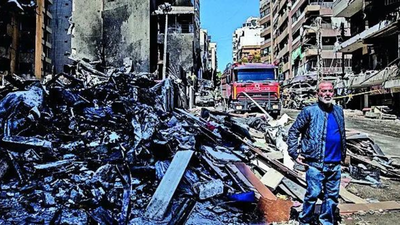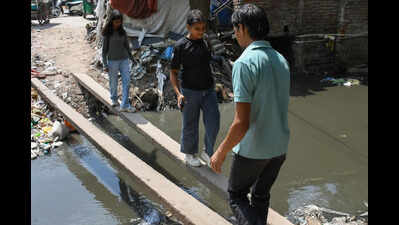

New Delhi: Waterlogging hotspots around central Delhi such as the stretch near ITO, Daryaganj, Kashmere Gate and surrounding areas are likely to see major relief this monsoon as the Delhi Gate drain, covered for nearly 40 years, is being opened for the first time to allow deep cleaning and to restore flow capacity.These areas had witnessed major flooding in 2023.“We are fixing long-pending bottlenecks to ensure places like ITO do not face the same flooding this year,” said irrigation and flood control minister Parvesh Verma, adding that work is being closely monitored.“The Delhi Gate drain, which had remained covered with slabs for nearly 40 years, is now being opened up for thorough cleaning,” he said.For decades, the structure had severely restricted proper desilting, contributing to repeated waterlogging in nearby areas, he said. “For the first time in four decades, the slabs are being dismantled to allow complete access to the drain, enabling deep cleaning and restoration of its carrying capacity.”The drain, which originates in Daryaganj and runs for about 2.5 km before meeting the Yamuna, is a critical channel catering to a dense, flood-prone stretch of central Delhi.For decades, a nearly 400-metre portion of the drain passing through Samta Sthal park remained covered with concrete slabs, supported by columns and beams, making proper desilting nearly impossible, said a senior official. This led to the accumulation of large volumes of silt, severely restricting the drain’s carrying capacity and contributing to frequent waterlogging in the adjoining areas.This year, the authorities have begun dismantling the slabs to access the choked stretch. Heavy machinery has being deployed to excavate the silt that has piled up for decades.According to the irrigation and flood control (IFC) department, desilting of the Delhi Gate drain has already crossed 70%, and over 21,000 metric tonnes of silt has been removed. Work is also under way on the remaining stretches, including areas near Gandhi Darshan and downstream under a flyover.Officials said restoring the carrying capacity of this drain is crucial for preventing water accumulation at ITO, Feroz Shah Road, Jama Masjid, near Supreme Court and nearby localities, which routinely face traffic disruption during heavy rain.In the July 2023 floods, the Yamuna rose to a historic 208.66 metres, breaching embankments and inundating large parts of the city. Areas such as ITO, Supreme Court, Kashmere Gate, Civil Lines and Mayur Vihar were among the worst affected. More than 23,000 people were evacuated as floodwaters entered homes and commercial zones.Officials said out that while river flooding was the primary trigger, inadequate drainage worsens the situation. “When key outfall drains like Delhi Gate are choked, stormwater has nowhere to go, leading to severe waterlogging even with moderate rainfall,” an official said.Alongside Delhi Gate, desilting of the Barapulla drain is also progressing rapidly, with nearly 78% of the work completed and over 31,000 metric tonnes of silt cleared, said the department.Across Delhi, nearly half of the 77 identified IFC drains have been desilted so far, and over 14 lakh metric tonnes of silt removed against a target of 28 lakh metric tonnes.