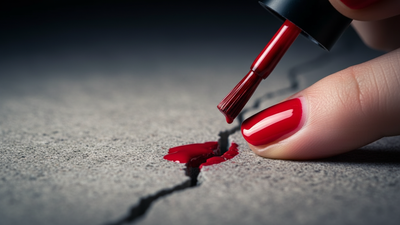

This usually happens when one is in the midst of working on his or her garden during the weekends. One reaches out for his trusty trowel or looks up and admires the beautiful plastic planter, only to see a web-like crack developing right before his eyes. It will seem logical that a run to the hardware store will be necessary, with epoxy to be bought, but many are now looking into what is found in their bathroom cabinets.The use of clear nail polish is becoming more common as a quick solution to minor cracks on tools and equipment in the garden. This has become a widely known trick to avoid problems before they become major issues.It is irresistible. Waterproof and fast-drying, chances are you will find a neglected bottle lying around somewhere inside your drawers. Simply apply a few layers over small cracks, and you have effectively created a personalised plastic cover that acts as a barrier against moisture and dirt. However, as much as this hack seems like a lifesaver, there is more to it than meets the eye when it comes to this chemical and safe technique for hobbyists.Science behind the fast-drying sealAlthough using nail polish as a sealant may sound like an urban legend or Internet prank, the practice actually has some scientific basis. For years, scientists have been using that polish for preserving specimens. That particular use case is studied in the paper titled Gel nail polish as an alternative to traditional coverslip sealants: A quick solution to a sticky situation published in the MethodsX journal.Nail polish is highly valued in laboratories because of its fast air-drying properties and ability to create a stable, non-permeable layer, preventing leakage of material. When used outdoors, this concept transforms into a temporary layer which may protect paint from peeling or even prevent moisture penetration through the wooden handle of a gardening tool or a planter.
 While scientifically sound due to its fast-drying, non-permeable properties, users should be mindful of potential chemical exposure and environmental impact, especially for organic gardening. Image Credits: Google Gemini
The supporters then took the concept even further by using the gel nail polish technique, which immediately solidifies on exposure to UV rays, forming a strong coating like industrial-grade resin.Still, there is one thing about nail polish which needs mentioning – although it performs excellently well when it comes to coating materials, it cannot provide sufficient bonding like a proper glue. This product is rather suitable for protecting small cracks before a tool experiences additional pressure or friction.For the most successful effect, begin by cleaning the area with rubbing alcohol until it is completely clean before applying the polish. This will make sure the lacquer adheres to the material rather than merely to any dirt in the garden. The second application, after the first coat dries, allows for a slightly thicker coating, resulting in an unexpectedly durable glossy spot even in the presence of morning dew or spraying water from a hose.Balancing convenience with chemical considerationsCertainly, ease of application makes it tempting to try, but the chemicals contained in these products require some consideration. Nail polishes are complex solutions of resins and solvents designed for beauty purposes and not necessarily for application in such a setting.This concern is detailed in the research paper The Safety of Nail Products: Health Threats in the Nail Industry, published in the International Journal of Dermatology. The study notes that many traditional polishes contain a “toxic trio” of ingredients, including toluene and formaldehyde, which are volatile organic compounds.When you apply these liquids to a large surface area or use them frequently for DIY repairs, you may be exposing yourself to fumes that can cause respiratory irritation or skin sensitivities.For the health-conscious gardener, this means it is vital to work in a well-ventilated outdoor area. If you are sealing a handle that you will be gripping for hours, you might also want to consider whether those chemicals could transfer to your skin during a long afternoon of digging.Furthermore, there is the environmental side to consider. As the shine wears off with time, especially due to intense sunlight exposure, these little bits of plastic can get into your soil.If you are growing an organic vegetable patch, you might prefer to steer clear of makeshift chemical sealants in favour of food-safe silicone or natural waxes. These alternatives provide a similar moisture barrier without the risk of introducing synthetic pollutants into your prize-winning tomatoes.This trick is proof of how innovative we have become. It provides an easy solution to prolonging the use of your most used equipment and decorations without having to throw them out.Knowing the basic science behind its application, as well as being aware of the components of this nail polish, will help you maximise its benefits. In the future, when you see even the tiniest of cracks on your watering can, you should know that just one coat of nail polish would be enough to fix it.