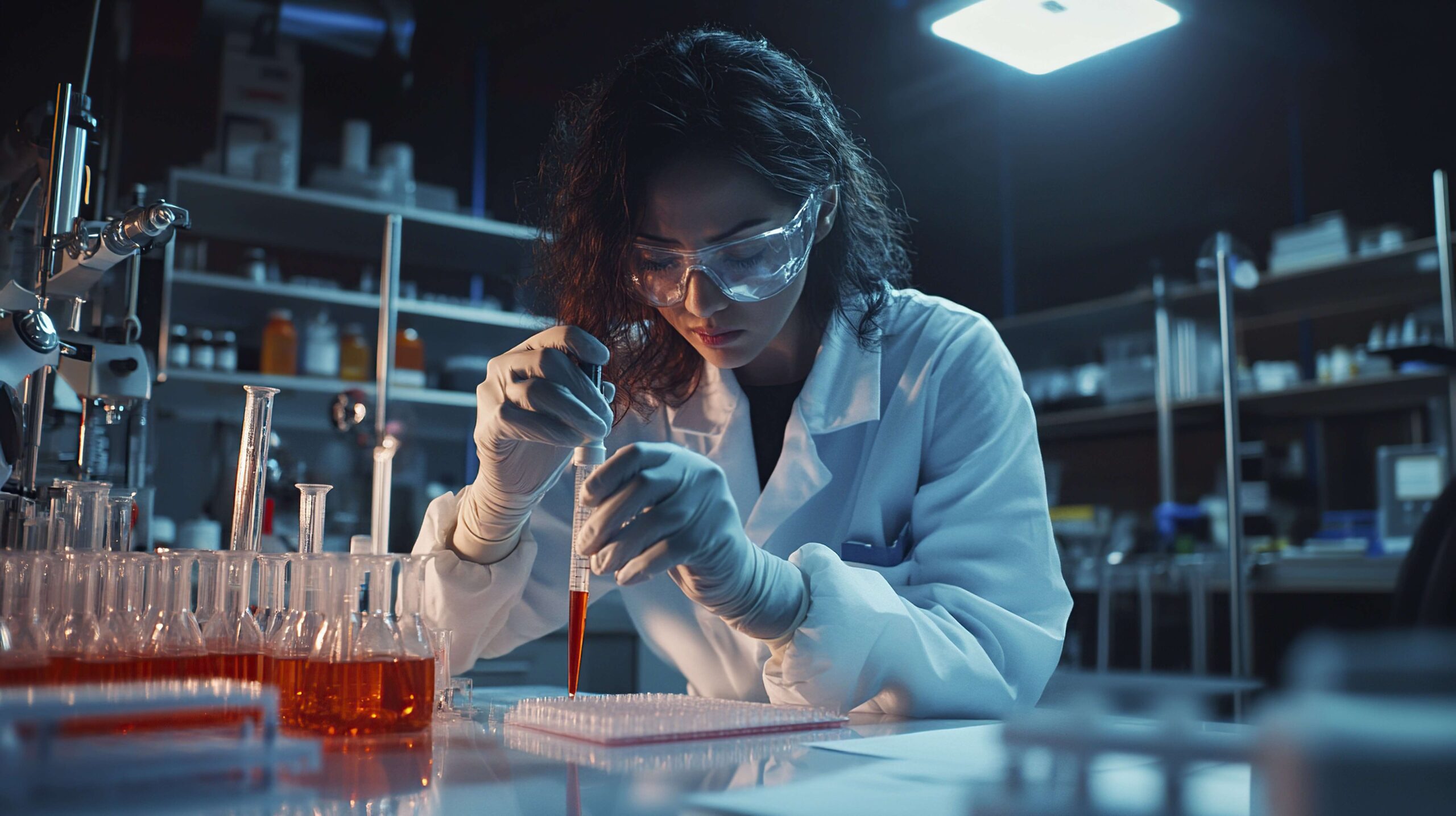


February 11 is the International Day of Women and Girls in Science—a UN-declared observance that recognises the achievements and challenges of women in STEM (science, technology, engineering, and mathematics).
Though progress has been steady, challenges persist. According to UNESCO, women account for less than one-third of the world’s researchers. From societal stereotypes to institutional bias, obstacles still prevent many girls from pursuing scientific careers.
But the winds are shifting. Across laboratories, classrooms, and tech startups, Indian women scientists are proving that innovation flourishes where equality exists.
A look back: From the shadows to the spotlight
History is filled with women who quietly changed the world through science. Rosalind Franklin helped reveal the structure of DNA, Ada Lovelace envisioned computing long before it existed, and India’s Dr Kamal Ranadive advanced cancer research decades ahead of her time.
For too long, these contributions remained undercelebrated. Systems built by and for men left little room for female scientists to thrive. The International Day of Women and Girls in Science seeks to rewrite that narrative—one where curiosity, not gender, defines a person’s scientific worth.
Women in STEM India: Leaders of change
Generations of brilliant women have enriched India’s scientific progress. In fields from medical research to space exploration, their influence continues to grow.
- Dr Gagandeep Kang, India’s foremost virologist, became the first Indian woman elected as a Fellow of the Royal Society for her work on rotavirus vaccines.
- Dr Janaki Ammal, a pioneering botanist, played a crucial role in shaping India’s biodiversity studies.
- Dr Tessy Thomas, known as the Missile Woman of India, led pathbreaking defence projects.
- Dr Swati Mohan, an Indian-origin scientist, guided NASA’s Mars 2020 mission.
These stories highlight what’s possible when equal access meets ambition. Yet data from the All India Survey on Higher Education 2021 reveals a critical disparity: 43% of Indian students in STEM are women, but only about 14% end up in research roles.
Clearly, the path from education to employment needs smoother bridges.
Empowering girls through STEM education
To achieve true gender equality in science, changes must begin early—in classrooms and communities.
Young girls often perform as well as boys in science and math, yet hesitate to pursue STEM further due to societal prejudice and lack of mentorship. The stereotype that “science is too hard for girls” is still alarmingly common.
Government initiatives such as Vigyan Jyoti and the INSPIRE Awards are addressing this challenge by promoting STEM education for girls in rural and urban schools across India. NGOs such as Aspire For Her and networks like Girls Who Code are creating safe learning spaces where girls can build confidence in their technical skills.
When curiosity is nurtured early, every school lab can become a launchpad for discovery.
Gender equality in science: From recognition to leadership
Brilliance often goes unnoticed when recognition systems are biased. Across the globe, men receive a disproportionate share of research funding, awards, and leadership positions in science.
India is taking steps to address this imbalance through initiatives such as the SERB-POWER fellowships, which provide financial and institutional support to women researchers. On a global scale, the L’Oréal-UNESCO For Women in Science Awards have highlighted thousands of women innovators.
Representation is crucial—not only in laboratories but also in leadership roles. When women scientists take the lead, they inspire younger generations to pursue similar paths without hesitation. The public recognition of figures such as Kalpana Chawla, Sunita Williams, and the women engineers behind ISRO’s Mars Orbiter Mission demonstrates that visibility fuels aspiration.
Intersectionality in STEM: Closing all the gaps
While gender bias has garnered significant attention, we often overlook intersectionality—the intersection of gender with class, caste, and geography.
A girl from a remote village faces barriers distinct from those of her urban counterpart: limited access to technology, fewer mentors, and social expectations that may discourage ambition. To achieve equity, rather than mere equality, India must invest in digital infrastructure, rural access to STEM education, and culturally relevant role models.
Projects such as the Atal Tinkering Labs and the Honey Bee Network provide rural youth with platforms to ideate and innovate, demonstrating that scientific potential exists everywhere—it simply needs opportunities to flourish.
Mentorship: Building bridges for women scientists
The journey from student to scientist is rarely a solitary one. Mentorship plays a critical role in whether women remain in STEM fields.
Female mentors, having successfully navigated similar societal and professional challenges, hold a unique position to guide, encourage, and advocate for young researchers. Leaders such as Dr Soumya Swaminathan, former Chief Scientist at WHO, frequently emphasise how mentorship multiplies impact—one empowered woman can empower many more.
Universities and research institutions are increasingly launching mentorship programs to create formal networks of support and collaboration. With the proper guidance, today’s mentee can become tomorrow’s mentor, thereby sustaining progress across generations.
Why diversity in science drives innovation
Science and gender equality share a fundamental truth: both aim to reveal the full potential of human knowledge.
A diverse research team can help solve complex problems across areas such as health policy, AI ethics, climate change, and space exploration. Research by McKinsey and Harvard Business Review confirms that diverse teams outperform homogeneous ones in creative problem-solving.
When women participate equally, solutions become more representative, inclusive, and effective for the societies they serve.
Steps toward a gender-equal STEM future
Systemic action must accompany the celebration of women in science. Stakeholders—from policymakers to private industry—can accelerate change by:
- Stakeholders can accelerate change by providing STEM scholarships, fellowships, and reentry programs for women who are returning to research.
- Ensuring gender-sensitive workplaces with flexible roles and family-friendly policies.
- We are actively promoting female leadership in scientific institutions and funding panels.
- We are also expanding outreach programs in rural and tribal areas to encourage grassroots participation.
- We are utilising media visibility and storytelling to normalise the presence of women scientists in the public imagination.
These interventions transform symbolism into structure, making equality the norm rather than the exception.
The way forward: A science of equality
The future of Indian science depends on every voice being heard. On this International Day of Women and Girls in Science, let’s recognise that empowering women in STEM is not just about fairness; it’s essential for innovation.
Every girl encouraged to question, experiment, and discover expands the frontier of human progress. As India moves toward becoming a global technology powerhouse, its success will rely not on a select few but on all—equally equipped, equally creative, and equally celebrated.
Science, after all, belongs to everyone.
Disclaimer
Views expressed above are the author’s own.
END OF ARTICLE