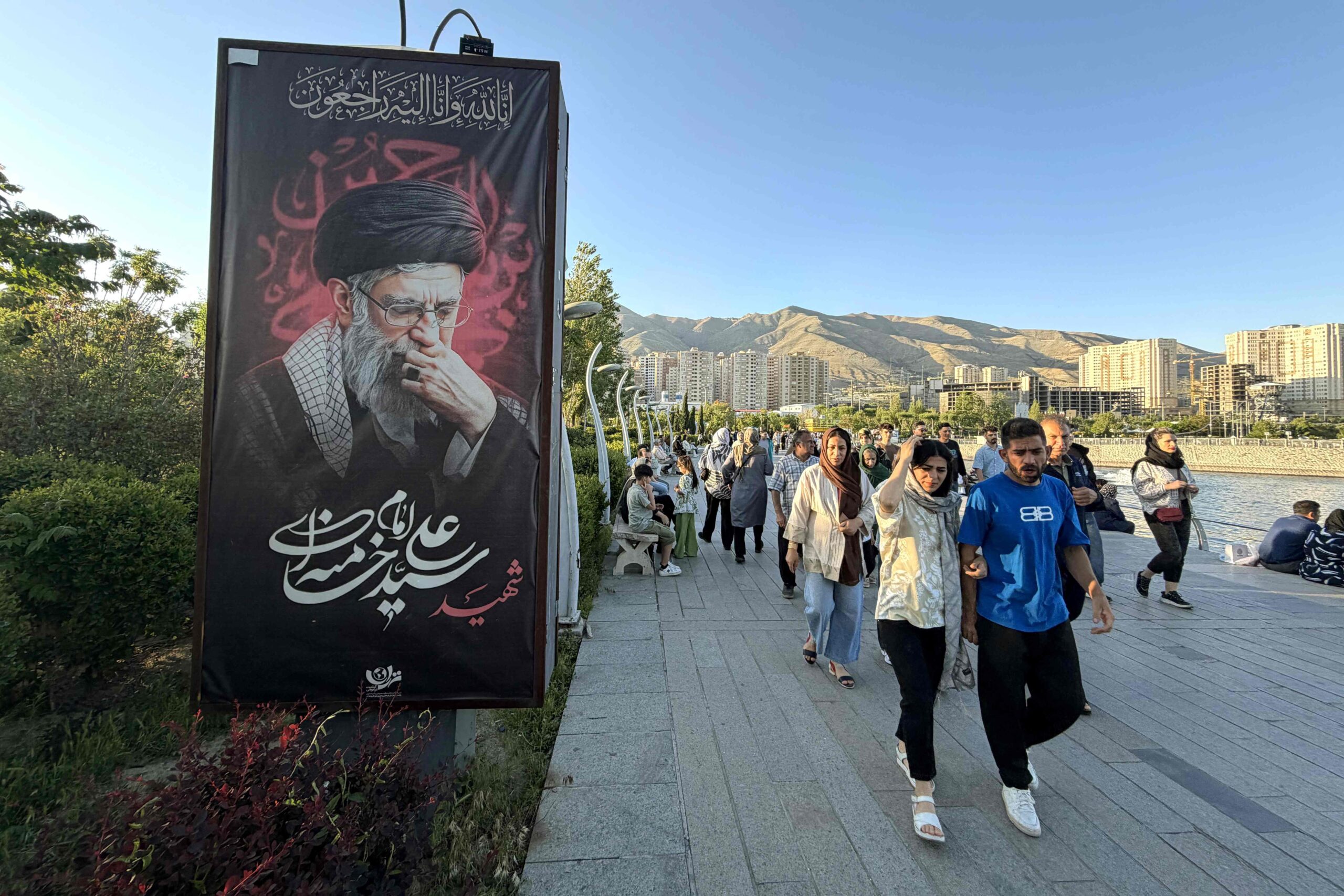
On February 28 this year, when Iran was attacked by the United States and Israel, it became clear that the world was going to witness a war that would affect a large part of the global population, from Indonesia to Brazil, where hundreds of trucks loaded with daily goods and groceries could not reach their destinations.
The attack assassinated Iran’s top leadership, including the 86-year-old Supreme Leader, Ayatollah Ali Hosseini Khamenei, along with his daughter, son-in-law, granddaughter, and several other senior leaders such as Admiral Ali Shamkhani, a close lieutenant and an IRGC veteran. The late Khamenei’s wife, Mansoureh Khojasteh Bagherzadeh, who was earlier reported to have been killed along with her husband and daughter, is now said to be alive. Meanwhile, his 55-year-old son, Mojtaba Hosseini Khamenei, who was severely injured in the attack, has now become the Supreme Leader, following in his father’s footsteps—a position his father did not want to take, and one Mojtaba himself had not shown interest in.
It was seen as an act of defiance by the Iranian state and the Guardian Council, which oversees the appointment of the Supreme Leader, to replace Khamenei with Khamenei (junior). Following Mojtaba’s appointment, Iranians on the streets across cities raised the slogan, “Dast-e-Khuda ayaan shud, Khamenei jawan shud,” meaning “The hand of God became visible, and Khamenei was rejuvenated (or became young).”
Escalation and regional fallout
The second attack, on the very first day, killed over 168 students at Shajara-e-Tayyebe Girls’ Elementary School in Minab town of Hormuzgan province, where a US Tomahawk missile had allegedly struck —an attack unprecedented in recent decades. The US has been denying its role in the attack, with President Donald Trump even blaming Iran for the killings, but various agencies have stated that the strike was carried out by the US Air Force.
It was a common perception among intellectuals and the media that if Iran’s top leadership, especially the Supreme Leader, was decapitated, Iran would surrender and there would be a power struggle that would ultimately result in the collapse of the Islamic Republic and then there would be a much-talked-about “regime change.” But this did not happen. Soon after the February 28 attack, Iran responded, and its retaliation was widespread, not just confined to Israel, as the late Supreme Leader had warned that any attack on Iran would trigger a regional war.


The Islamic Revolutionary Guard Corps (IRGC) began targeting various US assets across Gulf countries, including Bahrain, the UAE, Kuwait, Qatar, and Saudi Arabia, within hours of the first strike. Images emerged of US bases in the region being on fire, and the attacks and counterattacks continued for over a month. Meanwhile, US-Israeli strikes across Iran targeted dozens of hospitals, colleges, universities, and schools, while over 3,000 people were killed, among whom over 300 were children. The more the United States claimed to have destroyed IRGC bases and Iran’s ballistic missile facilities, the more aggressively Iran targeted US and Israeli interests. The much-famed aircraft carrier USS Abraham Lincoln was forced to retreat from the Persian Gulf by Iranian drones and missiles.
Strategic Leverage and Global Impact
In this war, Iran also found its biggest strategic asset against the US and Israel—the Strait of Hormuz, the sea passage through which over 20% of the world’s natural gas and petroleum is transported. The blocking of Hormuz made world powers understand the consequences of a war that is now being seen as unnecessary and avoidable. A world that had largely ignored decades of sanctions on Iran and restrictions on aid, resulting in dozens of air crashes and Covid deaths till Iran developed its indigenous vaccine, suddenly realised the humanitarian implications and the urgency of reopening the strait.
Despite repeated threats by Trump on Truth Social, Iran continued to block the strait. In the end, Trump issued strong warnings, including threats of bombing Iran’s power plants and ending “an entire civilisation like never before.” According to some reports, he tried to reach out to the nuclear codes as well, while diplomacy across the region and in the West eventually led to a fragile ceasefire. The US appears eager for a comprehensive deal, but Iran does not seem willing to yield under pressure until its demands—lifting of sanctions, unfreezing of more than $100 billion in assets in various nations, and reparations for the damage done during the war—are met. Iran has also categorically refused to hand over its enriched uranium, especially to the US.
It is now clear that, no matter how much the US and Israel claim that they have defeated Iran, the reality is that Iran is dealing from a position of power during the talks mediated by Pakistan in Islamabad.
Ideological resistance and aftermath
So, where does this defiance come from? Is it only because of ballistic missiles and control over the Strait of Hormuz? Yes, these are reasons behind such defiance, but we cannot negate the principle of martyrdom, which is the basic essence of the Shia faith within Islam, as 90% of the population in Iran is Shia. This defiance traces back to the 7th-century martyrdom of Imam Hussain in Karbala, along with a handful of his companions and family members. He rejected paying allegiance to the Umayyad tyrant Yazid bin Muawiyah, saying that “a person like me can never pay allegiance to a person like Yazid,” a statement the late Iranian Supreme Leader had quoted just days before his assassination, when the war drums were beating and Iran was being threatened with annihilation and total destruction.
It is this sense of resistance that has driven thousands of Iranians to the streets across hundreds of cities, showing their defiance against the aggression and vowing to fight till their last. Many Iranians have returned from abroad to stand with their nation at a time when it needs them most. Not only this, despite continuous heavy bombardment, every leader killed in the US-Israeli strikes, including the Supreme National Security Council secretary Ali Larijani and various other commanders and security officials, were given farewells that have rarely been seen over the years.
The war has turned into a major embarrassment for the United States and its most favoured ally, Israel, and, according to some, even bigger than the Vietnam War. Reports indicate that the damage done to US military assets across the region is far greater than disclosed; it may take many years to undo and could cost billions of dollars.
It is not clear when these hostilities will end or when a region long marked by imposed wars, the Israel-Palestine conflict, and Western interventions will witness peace. But one thing is certain: the loss of face suffered by the United States under the presidency of Donald Trump, along with Israel’s Benjamin Netanyahu, after attacking Iran, will take years to recover from, and it may never fully regain its standing with the rise of China, Russia, and Iran. And most of all, how can you defeat people who seek glory in martyrdom and can fight for their land till death, no matter the degree of aggression?
Last but not least, just like Gaza, this war has brought to the fore the double standards of liberal democracies of the world, for whom the cost of human life is nothing compared to the cost of oil and gas. There would never have been so much hue and cry if Iran had not used the Strait of Hormuz as a strategic leverage against the aggression, making the world—especially NATO nations—understand that this deadly war was not going to be a one-sided affair.
Disclaimer
Views expressed above are the author’s own.
END OF ARTICLE