Since I was a guest invited by the Royal Government of Bhutan, I was granted a permit to explore Eastern, Northern and Central Bhutan, regions that are generally inaccessible to most visitors. From Paro, I boarded a domestic flight to Bumthang, my heart filled with anticipation. I was fortunate to have a dedicated car, an experienced driver, and a knowledgeable guide who enriched every step of my journey. Yet nothing could equal my excitement, for I was travelling to the sacred land where the 2nd Buddha, Guru Padmasambhava, lived, meditated, taught Vajrayana Buddhism, subdued negative forces, concealed countless sacred treasures, and blessed the land with his enlightened presence. For every Vajrayana practitioner, Bumthang is a living mandala where the blessings of Guru Rinpoche continue to permeate every mountain, forest, monastery and stream.


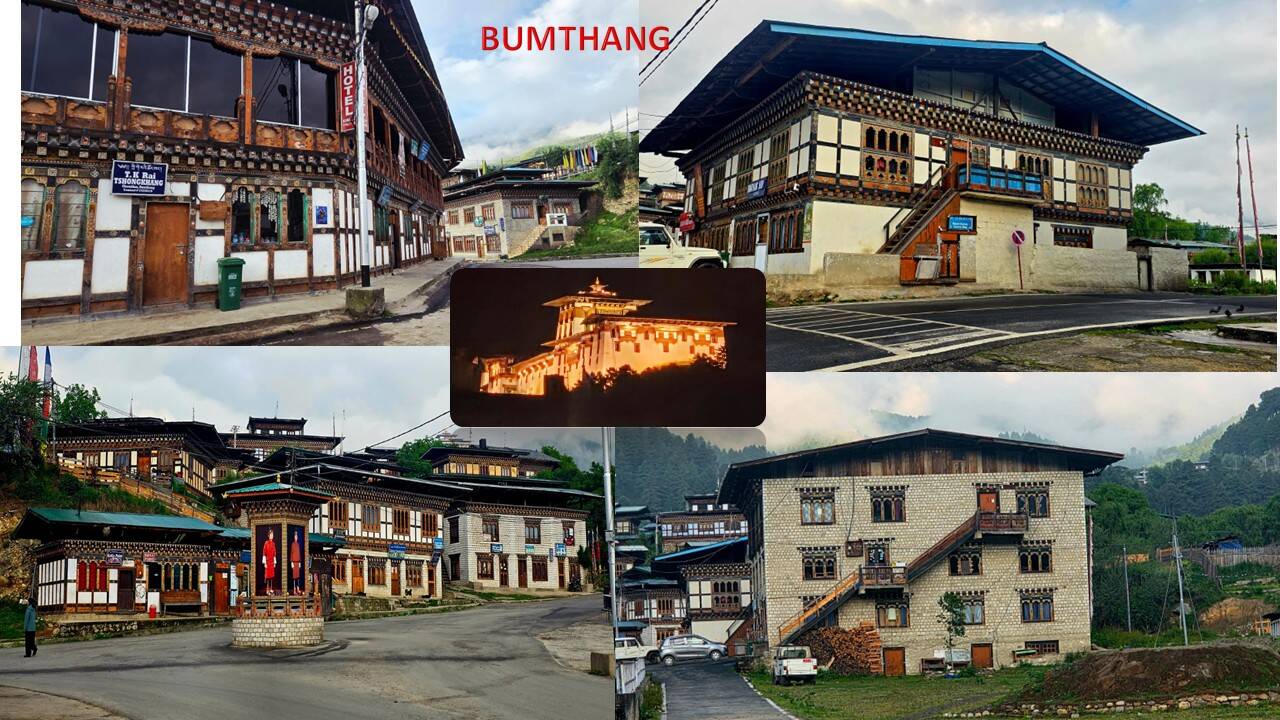
Bumthang consists of four distinct valleys, each possessing its own spiritual character and sacred history. Chokhor Valley, also known as Jakar Valley, is the principal valley and the most visited. Tang Valley is home to the famous Burning Lake and several sacred Guru Rinpoche sites. Ura Valley is renowned for its traditional Bhutanese village, pilgrimage routes and pristine beauty. Chhume Valley is celebrated for its exquisite weaving tradition and ancient monasteries. I stayed in the beautiful Jakar Valley, where my resort overlooked the magnificent Jakar Dzong, known as the Castle of the White Bird, the administrative and religious centre of Bumthang, commanding breathtaking views across the valley.
My pilgrimage started with Kurjey Lhakhang, the spiritual counterpart of Taktshang in Paro. Guru Padmasambhava came here to heal King Sindhu Raja, subdued the powerful local deity Shelging Karpo, and entered deep meditation inside a cave for three months. During this profound retreat, his physical body left a miraculous imprint upon the rock. This sacred imprint gave the monastery its name, Kurjey, meaning Body Imprint.

The monastery complex consists of three principal temples constructed during different periods, each preserving magnificent statues, ancient murals, sacred relics and priceless Buddhist artwork. Surrounding the complex are 108 chortens that radiate an atmosphere of serenity and spiritual power. Nearby stands a majestic cypress tree believed to have grown from Guru Rinpoche’s walking stick, a living testimony to his enlightened activity. As I sat in meditation before the sacred cave, I experienced an indescribable stillness. It felt as though I was seated within the Guru’s own aura, enveloped by an immense field of compassion, wisdom and blessing. Time seemed to dissolve into silence. I was fortunate to receive two tiny fruits from the sacred cypress tree, traditionally regarded as a precious blessing from Guru Rinpoche himself.
I could almost smell the fragrance of centuries of uninterrupted devotion as I entered Jambay Lhakhang, one of Bhutan’s oldest and most sacred temples. Tradition attributes its construction to the Tibetan King Songtsen Gampo during the seventh century as one of the 108 temples built to subdue negative energies throughout the Himalayan region. Guru Rinpoche later visited this temple, meditated here and bestowed his blessings upon it, further elevating its sanctity. Today, Jambay Lhakhang Drup is famous for its sacred fire blessings, masked cham dances and profound spiritual rituals.

My heart overflowed with reverence as I visited Tamshing Lhakhang, founded in 1501 by the great tertön Pema Lingpa, Bhutan’s most revered treasure revealer. Numerous sacred termas originally concealed by Guru Rinpoche are closely connected with this monastery. Tamshing continues to flourish as one of the most important Nyingma monasteries in Bhutan, preserving authentic Vajrayana teachings with remarkable purity. I stood spellbound before the ancient Guru Rinpoche murals, contemplated the sacred relics of Pema Lingpa, and quietly observed monks performing traditional Nyingma rituals whose chants seemed to echo through the centuries.
From there, I travelled to Mebar Tsho, the famous Burning Lake, nestled deep within dense forests and hidden among the mountains. This is unquestionably one of Bhutan’s most powerful pilgrimage sites. Guru Rinpoche is believed to have concealed numerous sacred treasures here for the benefit of future generations when the appropriate time arrived. In the fifteenth century, Pema Lingpa entered the waters carrying a burning butter lamp and emerged holding sacred treasures while the lamp continued to burn without being extinguished. This miraculous event established the authenticity of the revealed terma and gave the sacred place its enduring name, the Burning Lake. Just like at other sites, I offered butter lamps, khatas (ceremonial silk scarves), prayed sincerely for my family, friends and loved ones, and opened my heart to receive the blessings of Guru Rinpoche’s hidden treasures. The place was profoundly peaceful, yet intensely powerful, as though the blessings of Guru Rinpoche still flowed through the waters.

I enjoyed visiting the Four Great Meditation Cliffs of Guru Rinpoche, places of immense significance for serious Vajrayana practitioners. The first was Thowadrak Monastery, dramatically perched at an elevation of about 3,400 metres. This extraordinary monastery is one of the Four Great Meditation Cliffs of Bumthang, where Guru Rinpoche performed extensive meditation and is believed to have left behind a sacred wooden Garuda. Reaching this holy sanctuary required a demanding climb through forests and rugged mountain paths, but every step became an offering.
The second was Choedrak, another of Guru Rinpoche’s Four Sacred Meditation Cliffs. This remote retreat served as a place where Guru Rinpoche practised profound Vajrayana meditation and subdued local obstructing forces. Because of its isolated location, it receives very few visitors, allowing its atmosphere of deep contemplative silence to remain undisturbed.
The third sacred cliff was Kunzangdrak, another of Guru Rinpoche’s powerful meditation sites associated with advanced tantric practices. In later centuries, many accomplished Bhutanese masters undertook long retreats here, continuing the stream of blessings established by Guru Rinpoche himself.

The fourth was Shukdrak. Standing before these sacred cliffs, I reflected upon the countless enlightened masters who had meditated there over the centuries, transforming these mountains into reservoirs of spiritual blessings.
I then climbed up the mountain to the sacred Kurjey Lhakhang Holy Water, known as Drupchu. Guru Padmasambhava had meditated here after subduing a powerful local spirit, and the sacred spring emerged through the force of his blessings. Pilgrims drink this holy water, which purifies negative karma, heals physical and emotional suffering, generates spiritual merit and bestows blessings for long life. In Vajrayana Buddhism, such holy water symbolises the purification of body, speech and mind while constantly reminding practitioners of the enlightened activity and boundless compassion of Guru Padmasambhava.
Among all the Guru Rinpoche sites I have been blessed to visit, Bumthang stands second only to Taktsang. Throughout my stay, I experienced Guru Rinpoche’s living presence. Every monastery, every mountain path, every prayer flag fluttering in the wind, every sacred stream and every moment of silent meditation seemed infused with his blessings. Although my physical journey eventually continued another 157 kilometres to the beautiful Gangtey Valley, my heart remained behind. My body travelled onward, but my soul lingered joyfully at the lotus feet of Guru Rinpoche in the sacred valleys of Bumthang.
Disclaimer
Views expressed above are the author’s own.