The Earth provides enough to satisfy every man’s need, but not every man’s greed.— Mahatma Gandhi
There was a time in India when convenience was not considered a virtue. Simplicity was. Our civilization evolved not merely around consumption, but around restraint. A clay pot kept water naturally cool. Milk came in steel containers carried by the local doodh wala. Groceries were wrapped in old newspapers. Clothes were stitched to last years, not seasons. A traveller carried a brass lota, not a plastic bottle. Even festivals, despite their scale, were deeply local and biodegradable.
The Indian way of life was not environmentalism in the modern activist sense; it was civilizational wisdom. Nature was not treated as a resource alone, but as a living extension of existence itself. Rivers were mothers, mountains were deities, trees were sacred, and food was prasad. In our collective consciousness, there was always an invisible moral limit to consumption.
But somewhere in the pursuit of modernity, development and urban aspiration, mankind quietly replaced the philosophy of need with the obsession for ease. Today, convenience has become the defining principle of modern civilization. And perhaps, the most dangerous pollution of our times is not smoke from factories or plastic in oceans — it is the human addiction to convenience.
A few days ago, the Indira Gandhi National Centre for the Arts organised a seminar on carbon footprint and environmental consciousness, One idea that emerged repeatedly during the deliberations was profoundly unsettling: modern society carefully prints expiry dates on every packaged product, but nowhere does it acknowledge that this very culture of disposable convenience is pushing the Earth itself towards an expiry date. Between 2010 and 2024, India’s single-use plastic consumption grew by over 700 percent. Today, we generate nearly 3.5 million tonnes of plastic waste every year, of which — by the government’s own admission — barely a third is collected, and a fraction actually recycled. The rest flows into rivers, chokes drains during monsoon, settles into the soil where our food grows, and increasingly, into our own bodies. A 2022 study published in Environment International found microplastics in human blood for the first time. We are, quite literally, eating our own convenience.
Every packet in a supermarket today carries a detailed declaration. Calories. Ingredients. Manufacturing date. Maximum Retail Price. Expiry date. Yet no packet tells us how much water was consumed to manufacture it, how much plastic waste it will create, or how many years it will remain buried in the soil after a five-minute use.
The tragedy of modern consumer culture is that it has normalised waste. Human beings now generate garbage not accidentally, but systematically. Convenience is no longer a by-product of life; it has become an industry. Walk into any middle-class home in Delhi, Mumbai, or Bengaluru today. On a Friday evening, you will find three or four delivery bags piled near the door — Zomato, Blinkit, Amazon, Swiggy — each order individually packed, double-bagged, cushioned with bubble wrap, sealed with tape, accompanied by sachets of ketchup that will never be opened. We have a word for this in our offices: suvidha ki saja — the punishment of comfort.
The Indian quick-commerce sector crossed $5 billion in 2024. Each of those billions represents millions of individual deliveries, each generating packaging waste that our municipal systems are not remotely equipped to process.
India, unfortunately, is beginning to imitate the worst excesses of Western consumerism without inheriting the discipline of waste management that accompanied it. The result is visible everywhere. Plastic mountains on city edges. Rivers turning into drains. Cows feeding on garbage dumps near temples. Forests shrinking for highways of endless consumption. Villages adopting packaged lifestyles once alien to them.
One of the most disturbing images of our times is not industrial smoke rising from factories. It is the sight of a sacred animal eating plastic from a garbage heap. It reflects not merely administrative failure, but a moral contradiction within society itself. We continue to worship nature symbolically while violating it behaviourally.
This crisis cannot be solved merely through policy documents or annual slogans around World Environment Day. Environmental consciousness cannot survive as a seasonal campaign. It must become part of social behaviour, educational culture and public morality.
India’s cultural institutions, educational systems and civil society organisations have a larger responsibility in this regard. The environmental debate should not remain confined to scientific conferences or climate summits. It must enter classrooms, films, literature, temples, family conversations and popular culture. Children must not merely learn definitions of carbon footprint; they must learn the ethics of responsible living.
The encouraging sign is that change often begins through small cultural shifts. A child stopping his father from throwing garbage on a railway platform is not a small incident; it is a civilizational correction. A school replacing plastic bottles with Millti Ke Kulhad is not symbolism; it is behavioural transformation. Choosing sattu over packaged soft drinks in a public gathering may appear insignificant, but such decisions redefine social habits.
The environmental challenge before humanity is not technological alone. It is philosophical. The planet is suffering not because human beings are evil, but because modern civilization has mistaken comfort for progress and consumption for happiness.
For centuries, Indian civilization taught balance. The principle of Santulan existed not only in spirituality, but also in lifestyle. The idea was never anti-development. India historically built great cities, maritime trade networks and prosperous kingdoms. But there remained an understanding that nature was not infinite. The modern economy, however, functions on the dangerous assumption that human desire has no moral or ecological limit.
Perhaps the time has come to ask uncomfortable questions. Does every product need three layers of packaging? Does every household require excessive consumption in the name of status? Does development always mean more disposable material? Is convenience worth the slow poisoning of rivers, soil and air?
Human civilization today stands at a strange crossroads. Never before has mankind possessed so much comfort, and never before has the Earth appeared so exhausted. The climate crisis is no longer an abstract scientific prediction. It is visible in unbearable summers, shrinking water tables, erratic rainfall, poisoned air and disappearing biodiversity.
The environmental debate therefore must move beyond activism and enter the realm of ethics and culture. The future of the planet will not be decided only by governments or global summits. It will be decided in kitchens, supermarkets, schools, homes and daily habits. Because ultimately, pollution is no longer merely what comes out of factories. Pollution is also a civilization that cannot live without convenience.
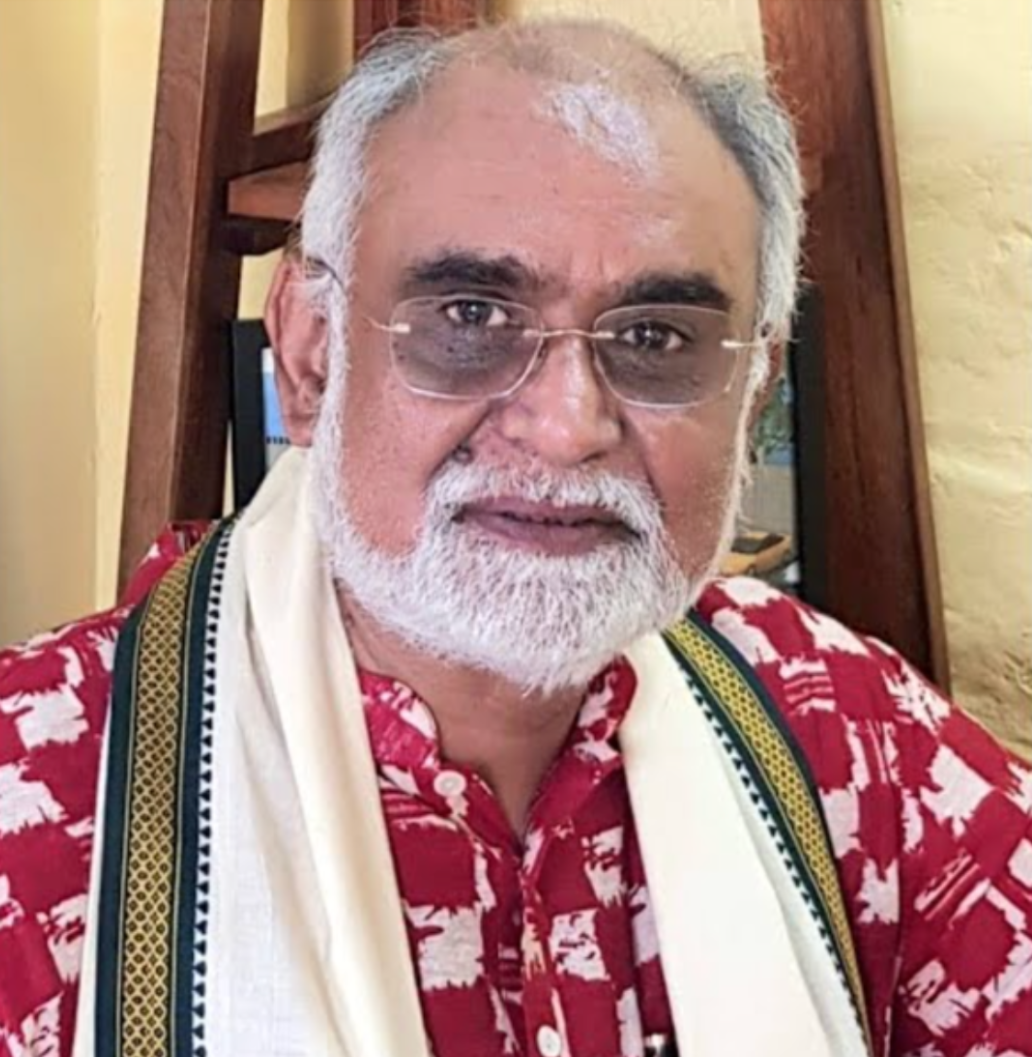
(Writer is Member secretery of Indira gandhi national Centre for Arts)
Disclaimer
Views expressed above are the author’s own.