Today’s edition looks at power, migration and ambition across the Indian diaspora. In the US, Democrats are still trying to understand how Kamala Harris lost 2024 and why the road to 2028 already looks uncertain. In the UK, Indians remain the largest group of non-EU nationals receiving long-term visas, even as Britain tightens its immigration rules. And in a quieter but equally telling story, a 23-year-old from Rohtak has become Britain’s youngest Indian-origin mayor, carrying with him the familiar diaspora mix of memory, public service and impossible ambition.
Let’s go.
THE BIG STORY


Democrats’ 2028 problem begins with 2024
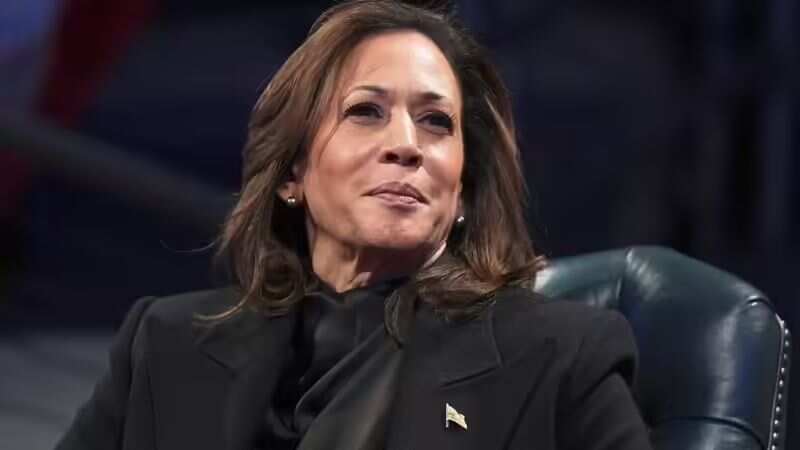
The Democratic Party has finally opened the sealed room of 2024 and found, unsurprisingly, that the ghosts are still there. Its long-awaited post-mortem on Kamala Harris’s defeat to Donald Trump was meant to explain what went wrong. Instead, it has revealed a party still arguing over the body.
The report accepts the obvious: the campaign failed. Harris inherited a difficult race after Joe Biden stepped aside late, raised enormous sums in a compressed campaign, and briefly generated the sense that Democrats had found a way out of their own panic. But the election exposed something harder to repair than a bad campaign. It showed a party that had grown distant from working-class voters, uncertain on inflation and immigration, weak in new digital spaces, and too reliant on the idea that anti-Trump sentiment could do the work of politics.
Why it matters:
For Indian-Americans and the wider diaspora, this matters because the Democratic crisis is also a crisis of America’s immigrant politics. For years, Democrats treated many immigrant communities as part of a natural coalition built around diversity, aspiration and resistance to Trumpism. But 2024 disturbed that assumption. Latino voters, young voters, men, working-class voters and sections of the immigrant electorate showed that identity alone could not guarantee loyalty. The next Democratic candidate will have to speak not only to fear of Trump, but to wages, safety, borders, belonging and ambition.
Driving the news:
The 192-page review says Democrats lost credibility on the economy, immigration, public safety and inflation, while Republicans successfully tied Harris to voter dissatisfaction with the Biden administration. It also points to organisational complacency, weak digital strategy and inefficient spending. Harris raised roughly $1 billion over a 107-day campaign, but money could not overcome the weight of public anger over the cost of living, border politics and perceptions of elite detachment. Yet the report also avoids some of the most painful questions: Biden’s decision to seek re-election despite concerns over his age, the rushed elevation of Harris without a competitive primary, and Democratic divisions over Gaza.
The big picture:
The real wound is not simply that Democrats lost. Parties lose elections and recover. The deeper problem is that Democrats still cannot agree on what their defeat means. The establishment sees a failure of message and organisation. Progressives see a failure of imagination, courage and leadership. Harris may have been handed an almost impossible race, caught between defending Biden’s record and promising generational change. But the autopsy suggests the party’s illness began before her nomination. Trump’s return was not merely a Republican victory. It was a warning that the anti-Trump coalition, by itself, is no longer a roadmap.
NRI Watch

Indians still top UK’s long-term visa list
Even as Britain tightens the gates, Indians remain among the most determined to walk through them. In the year ending December 2025, Indian citizens received the highest number of long-term UK visas among non-EU nationalities, with around 1.38 lakh arrivals across work, study and other long-term routes.
The numbers tell two stories at once. On one hand, India remains central to Britain’s immigration system: 40,000 work visas, 89,000 study visas and 9,000 other long-term visas went to Indian citizens. On the other, the rush has clearly slowed. The total was down 11% from the previous year and nearly 50% from the year ending December 2023, when 2.77 lakh long-term visas had been issued to Indians.
Britain’s post-pandemic immigration surge is now being deliberately cooled. Policy changes brought in by Conservative and Labour governments have made the route narrower: restrictions on dependants for most overseas students and care workers, higher salary thresholds for skilled worker visas, and the closure of the health and care route. Net migration has fallen sharply to 1.71 lakh, far below the peak of 9.44 lakh in the year ending March 2023.
The Indian story also has a reverse movement. Indians were the most common non-EU nationality among those emigrating from the UK, with 75,000 Indian citizens leaving in the year ending December 2025, a 29% rise from the previous year. The old dream of Britain has not disappeared, but it is being recalculated.
For Indian students and professionals, the UK remains a powerful destination, with its universities, labour market and deep diaspora networks. But the message from London has changed. Talent is still welcome. Dependence is not. The door is open, but the corridor has become narrower.
OFFBEAT

From Rohtak to mayoral robes in Britain
At 23, Tushar Kumar has travelled a quietly remarkable distance: from Rohtak to the mayoral chair of Elstree and Borehamwood Town Council. The Haryana-born politician, who moved to the UK as a child, has become Britain’s youngest Indian-origin mayor, three years after becoming the country’s youngest Indian-origin councillor at 20.
His rise has the shape of a diaspora fable, but the details are wonderfully specific. In 2023, Kumar was still a second-year politics student at King’s College London when he stood as a Labour candidate. He won by a single vote after a recount, defeating the Conservatives in a seat they had held for three decades. In politics, landslides make headlines, but sometimes a single vote changes the course of a life.
Kumar’s story is also a family story. His parents moved from Rohtak to the UK 13 years ago and work in education. His mother, Parveen Rani, whom he credits as his main inspiration, also entered public life, winning a seat on Hertsmere Borough Council and later becoming deputy mayor. She founded Hindi Shiksha Parishad UK, which offers free Hindi classes, and Kumar still volunteers there when time permits.
As mayor, he says he wants to remain accessible, champion local groups and inspire young people to enter public service. His Indian connection remains visible too. He visits India often, speaks at schools and universities, and helped organise the council’s first Diwali celebration, which has now become an annual event.
And because diaspora ambition rarely travels light, Kumar is already looking far beyond the mayoral chain. Inspired by Rishi Sunak’s rise, he says he would like to become prime minister of the UK one day. For now, the journey from Rohtak to Elstree is enough: a reminder that migration is not only about visas and numbers, but also about memory, inheritance and the strange places where ambition finds a home.
DID YOU KNOW?


NRI SPOTLIGHT

LEMON CHILLI.NEWS


Disclaimer
Views expressed above are the author’s own.
END OF ARTICLE