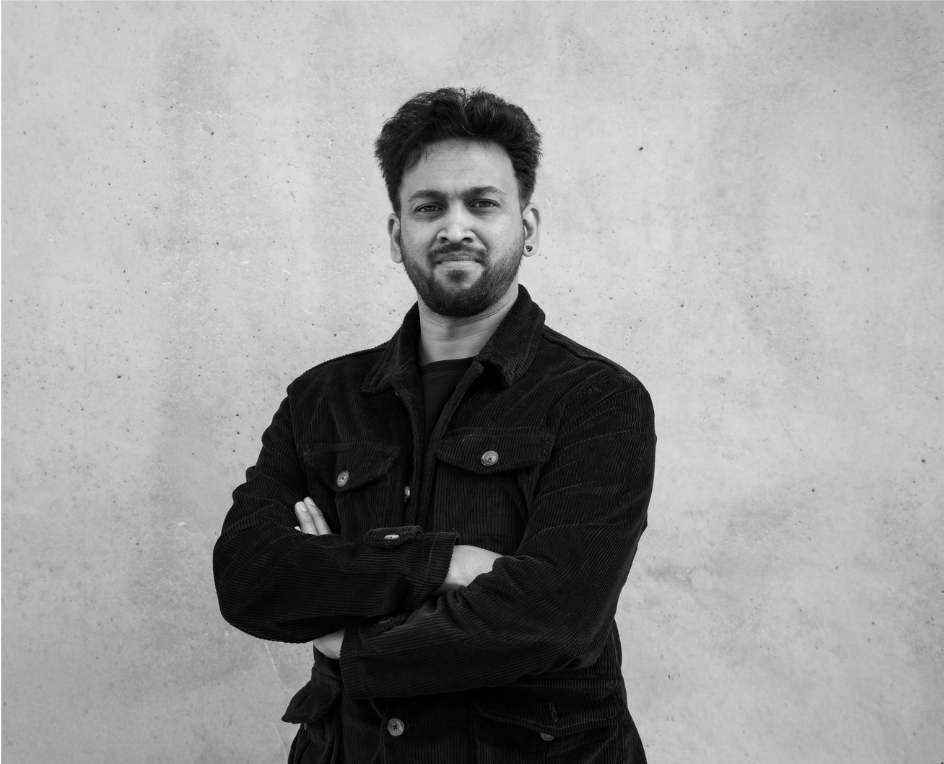
A lover of design, community, a sports fanatic and an explorer at heart, Rahul Umashankar’s career has focused on his passions, and being fearless in pursuing them.
Though he was born and raised in Tumukur near Bangalore, for Rahul studying his Masters in Italy at POLIMI Graduate School of Management felt, in many ways, like coming home. Milan was the city where he’d made his first steps years before as an architect, earning his degree from Politecnico di Milano before steadily building his experience in China.


Upon returning, not only did he enhance his education he also met his co-founder, launching EUDEN Architects, a company which focuses on creating sports & entertainment venues. Not only does his company merge his passions, it operates between Milan and Bangalore merging his homes.
He shares his story here.
Tell us about your background
I grew up in a close-knit family that valued education and hard work. Life in a smaller town emphasized community. Early in my career, I was fascinated by how design could improve public space and sustainability in Indian cities. At the same time, sports had always been important to me, so I quietly hoped to work on sports facilities too.
What was the reason you decided to study in Italy, and at POLIMI?
Politecnico di Milano is one of the world’s top design schools, and Milan itself is a living laboratory where art, architecture, design, fashion, and sport intersect. Being there extended my learning beyond the studio, shaping my professional thinking and cultural awareness, while offering the chance to learn from renowned architects and be part of a school with a legacy of influential designers.
Why did you then return to enrol in the MSc in Sports Design & Management?
After graduating in 2018, I moved to Shenzhen, working on sport climbing facilities linked to the 2022 Asian Games. It was my first real exposure to sports infrastructure, and it transformed how I saw architecture and revealed that designing for sports requires understanding athletes, events, performance, and the wider ecosystem.
Those years exposed me to the scale and ambition of global sports projects, but also highlighted gaps in my knowledge, particularly in the business and strategy of sports development.
Around that time, I received an invitation to join the MSc in Sports Design & Management at POLIMI. It felt like the perfect way to combine my architecture background with my growing interest in sports infrastructure from both design and management perspectives.


Returning to Milan also felt personally meaningful. It’s where my professional journey began, so coming back felt like starting a new chapter with greater clarity.
What was it like moving to Italy?
Moving to Italy required patience and an open mind. Adapting to daily life, Italian customs, and the pace of study became lessons in embracing the local culture.
Sport was a wonderful bridge; it helped me connect with people because shared passions often go beyond language or background.
What made my experience truly special was working with my mentor, Prof. Paolo Debiaggi. His guidance shaped how I see architecture and connect education with real-world practice. Combined with POLIMI’s supportive environment, which values both student wellbeing and industry engagement, this period was genuinely enriching and transformative.
What were the best things you gained from your studies?
The programme transformed how I view sport, revealing it as a dynamic ecosystem rather than just a collection of buildings.Working with industry professionals gave me insights into its strategic, economic, and social aspects. Perhaps most importantly, what started as an academic collaboration grew into a professional partnership. My thesis supervisor later became my co-founder at EUDEN, a testament to POLIMI’s lasting connections.


Did your study experience change your professional ambitions?
Yes. Architects are often trained as designers, with limited exposure to business or strategy. The master’s reshaped my perspective, helping me combine design with entrepreneurship and sector expertise. It helped me see myself not just as an architect, but as a specialist in sports infrastructure, bridging design, strategy, and implementation.
The curriculum offered rare access to industry leaders, federations, and facility operators across Europe. Seeing real decision-making within sports organisations helped me understand how design, investment, management, and long-term planning intersect, giving me a foundation to align architectural thinking with the business of sport.
How has your career progressed since graduating?
I joined one of Italy’s leading companies in sports facility development, contributing to major stadia and arenas. That experience deepened my understanding of large-scale international projects and eventually inspired me to co-found EUDEN Architects.
How has the School supported you since?
POLIMI has an incredible global alumni network, fostering collaboration and professional exchange. The India Alumni Chapter, launched last year, is still in its early stages but shows great promise as a platform for building a strong professional ecosystem in India.
What is your favourite thing about your work today?
I get to spend time in my happy place and design it, where architecture becomes a stage for human performance, connection, and community. I love solving design challenges and creating spaces that truly work for people, while staying involved in the broader sports ecosystem.
Where do you see yourself in five years?
I aim to contribute to major sports facilities in India and support the nation’s sporting ambitions. With India targeting the 2036 Olympics and other major events, there is a strong opportunity to develop world-class infrastructure. I aim to create spaces that enhance performance, build community, and support India’s sports culture.
Disclaimer
Views expressed above are the author’s own.