Counting halls have their own unique atmosphere. On 4 May 2026, in Kolkata, the Bharatiya Janata Party’s mood was one of confirmation rather than surprise. Throughout the morning, the vote leads remained steady, then grew wider, eventually forming a pattern evident in the final weeks of the campaign for anyone paying attention. The cadre entering the counting centres anticipated this outcome. What appeared on the screens was not an unexpected upset, but rather the culmination of a long-standing trend-a gap on the political map that PM Modi and HM Amit Shah have been reshaping over the years.
Since 2014, the Modi-Shah project has had a clear structural ambition. Bring every major Indian state, including those long considered politically inaccessible to the BJP, into the orbit of a single national governance and security framework. Bengal, with its distinct political culture and its 2,217-kilometre border with Bangladesh, was the most difficult test of that ambition. The mission was given to a leader chosen specifically for the state Bengal is in: Sunil Bansal.
From zero seats in 2006 to a commanding lead across nearly 190* constituencies in 2026, the BJP’s twenty-year arc in West Bengal is not a story about Hindutva alone, or about Mamata Banerjee’s fatigue, or about Suvendu Adhikari’s emergence as the state’s tallest opposition voice. It is a story about an organisation. And the man who, more than anyone else, turned that organisation into a weapon is Sunil Bansal.
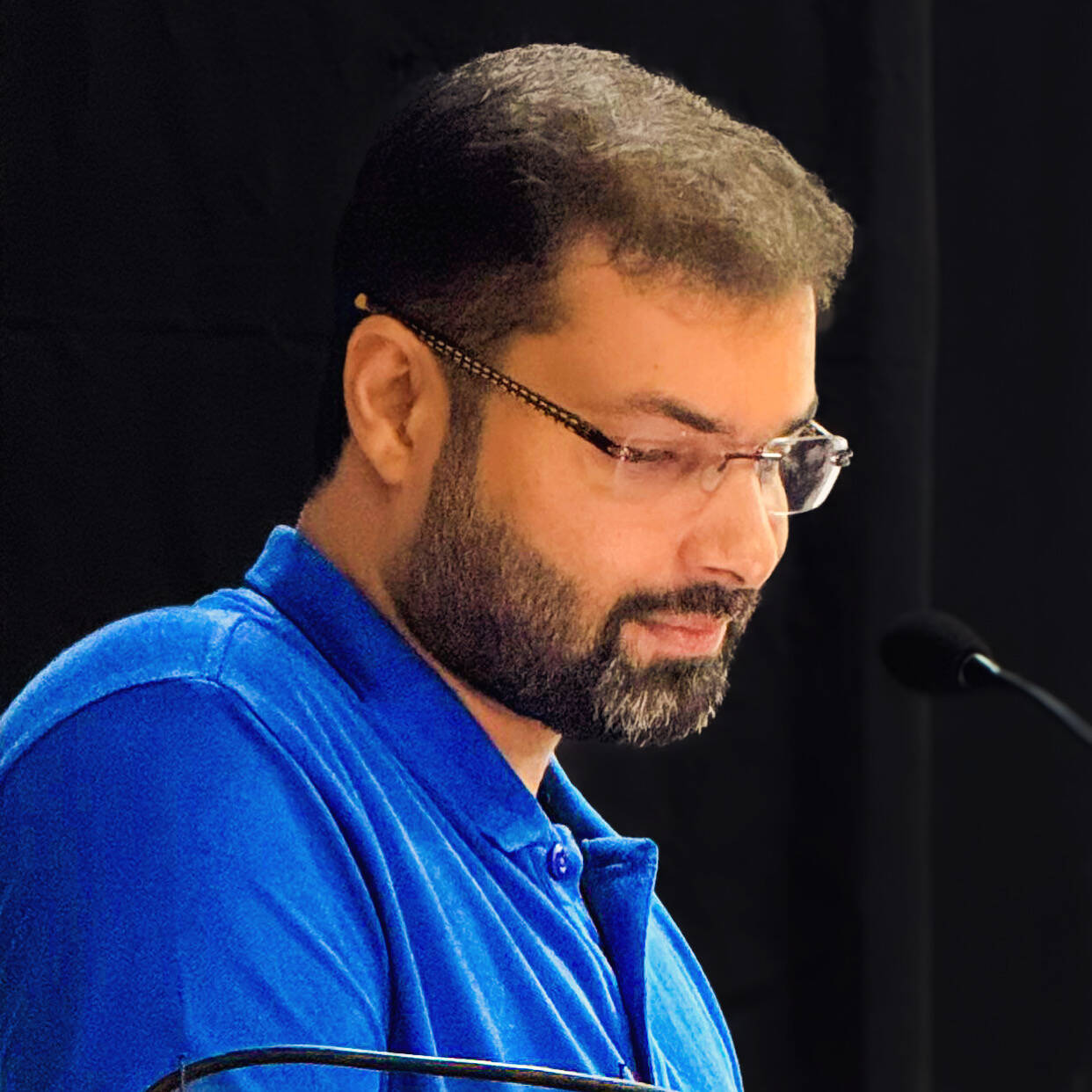
I have watched Sunil Bansal work since 2014. I have seen him take seats nobody believed could be taken, and I have seen him do it without raising his voice, without seeking a camera, and without ever once making the campaign about himself. To understand what just happened in Bengal, you have to understand how he thinks.
The Bengal puzzle, and Asmita upheld
For two decades, the conventional analysis of West Bengal went something like this: Bengal has its own political grammar, structurally hostile to the BJP because of its identity politics around Bengali asmita, its left-liberal intellectual culture, its dense Muslim demographic, and Mamata Banerjee’s street-fighter charisma. Even after 2019, when the BJP swept 18 of 42 Lok Sabha seats, most strategists assumed assembly arithmetic would correct itself. In 2021, when the BJP fell short with 77 seats despite a furious campaign, that view hardened. Bengal, the wisdom went, would always slip away at the last mile.
That wisdom underestimated three things. The depth of anti-incumbency that fifteen unbroken years of TMC rule would eventually produce. The cumulative effect of central agency investigations into the school recruitment scam and other governance failures. And most importantly, the patience of an organisation builder prepared to spend a decade laying foundations before anyone noticed the building.
Sunil Bansal, working under the direct guidance of Prime Minister Narendra Modi and Home Minister Amit Shah, understood all three. The Modi-Shah leadership has, since 2014, been methodical about matching the organisational hand to the state. Bengal was given to Bansal because Bengal demanded patience, and Bansal had spent his career proving that patience pays.
The Bansal method: booth, ward, mandal, district
The first thing to understand about Bansal is that he does not believe in waves. He believes in lists. Lists of booths. Lists of polling agents. Lists of households. Lists of caste clusters within caste clusters. In Uttar Pradesh in 2017 and again in 2022, he built what is still the most granular booth-level machine in Indian electoral politics, with named workers responsible for slabs of fifty to sixty voters each. In Odisha in 2024, he replicated that machine in a state where the BJP had been a junior partner for decades, and produced a clean majority that displaced Naveen Patnaik. In Telangana, where the BJP had no organisational base worth the name, he gave the party its first real foothold and a pole position in the state’s bipolar realignment.
When Bansal was given charge of West Bengal, he did what he always does. He stopped talking about the chief minister’s face and started counting booths. Bengal has roughly 80,000 polling stations. By the end of 2024, internal BJP estimates suggested the party had functional booth committees in over 65,000 of them, a coverage figure that no opposition force in Bengal had matched in living memory. That number alone explains more about 2026 than any speech, any rally, any clever slogan.
The team that worked as one
Bansal’s second underrated quality is his understanding of his place in a hierarchy and his willingness to work through it rather than around it. Bengal was not a one-man campaign. The campaign operated under the political direction of Modi and Shah, with B L Santhosh anchoring the organisational chain on behalf of the sangathan. The team assembled around Bansal gave him the kind of backing a sangathan effort of this scale demands.
Bhupendra Yadav, senior leader in the party hierarchy and a veteran election manager with experience across Bihar, Maharashtra and beyond, brought organisational depth and alliance-management experience to the Bengal effort. Mangal Pandey took ownership of cadre coordination and on-ground political management. Amit Malviya anchored the communications and digital effort around the SIR controversy, the R G Kar case, and the school recruitment scam. State President Samik Bhattacharya, a long-time RSS hand, was the campaign’s primary public voice within the state. State Sangathan Mantri Amitava Bhattacharya ran the day-to-day machinery of the state unit. Suvendu Adhikari, as Leader of Opposition, carried the political fight on the floor of the assembly and on the ground. This team was operating with several levels of capable leaders and karyakartas down to the Booth level.
What distinguished this team was the way Bansal chose to work with it. He shifted his office and his entire team from Delhi to Kolkata, and stayed there for the duration of the campaign. He travelled extensively across the state, sitting through booth-level meetings from the Sundarbans to Cooch Behar, from Purulia to North 24 Parganas. We chose to relocate physically, even as political management increasingly moves through dashboards and remote review, as a deliberate organisational signal. The same booth-level tracking discipline he had used in Uttar Pradesh was in place in Bengal, with district-wise ownership matrices reviewed weekly.
Why Bengal is a national security state, not just a political state
Now we come to the part of this story that is too often missed in the noise of seat counts.
In a recent interview, BJP National General Secretary (Organisation) B L Santhosh said that West Bengal holds utmost importance for national security. He was not speaking in metaphor. Look at the map. West Bengal shares a 2,217-kilometre border with Bangladesh, the longest of any Indian state. It contains the Siliguri Corridor, the twenty-two-kilometre-wide strip of land that connects the entire North East to the rest of India. It abuts Nepal in the north and Bhutan to its immediate north-east. It hosts the Kolkata and Haldia ports, the eastern naval command’s logistical depth, and the strategic air bases at Hashimara, Kalaikunda and Bagdogra.
For two decades, governance in this state has been hostage to a political dispensation whose vote-bank calculations, according to credible accounts from central agencies, have made it harder to enforce border discipline, verify electoral rolls, and act decisively against cross-border infiltration networks. The recently completed Special Intensive Revision of the rolls, which the Election Commission of India confirmed had identified roughly nine million entries requiring scrutiny, was only the most public manifestation of a deeper problem. The change in regime in Dhaka after the BNP’s return to power in February 2026 has further raised the stakes. The Teesta water dispute, the Ganges treaty’s December expiry, and the question of how India’s eastern flank is administered are no longer issues that can be left to state-level pragmatism alone to resolve.
A BJP government in Kolkata completely changes this calculus. Border fencing, citizenship processing under the Citizenship Amendment Act, intelligence sharing between state and central agencies, and the political will to act on the recommendations that have been gathering dust on Writers’ Building desks for fifteen years, all of this becomes possible. This is the kind of state-centred alignment that has defined the Modi government’s national security approach since 2014: an India where the politics of a state does not become an obstacle to the nation’s security. In delivering Bengal, Bansal has not merely won a state for his party. He has closed the eastern flank of that architecture.
What Bengal teaches the rest of the country
In a cadre-based party like the BJP, individual ambition is not the engine of growth. Organisation is. Decisions about who serves where, in what role, and at what time are taken by the party’s leadership in keeping with the needs of the sangathan, not by the calculations of individuals. Bansal, in my observation, has reflected this ethos almost reflexively since 2016. He does not ask what he will get next. He asks what the next state needs, and he goes there, following the party’s instructions.
That is the real lesson of Bengal for the rest of the country, and for the rest of the party.
The BJP today operates in an electoral landscape where Tamil Nadu, Kerala, and Andhra Pradesh, along with the long road in the eastern and southern states, still demand patient, generation-spanning organisational work. The Bengal model, of senior leaders working in concert, of a state president and state sangathan mantri carrying the daily load, of a national general secretary willing to physically relocate to the state, of every tier of the party from booth to district to state aligning behind a single framework, is now the template. It worked here. It will be applied, in modified form, wherever the next contest is.
The verdict of 4 May 2026 is not a personal achievement for any single leader. This is the result of a sustained, multi-layered organisational effort over two decades, with hundreds of thousands of workers, district structures, state leadership, and central direction working toward the same end. The political question behind it, whether the BJP could integrate every major Indian state into a single national governance and security framework, has been the defining ambition of the Modi-Shah period since 2014. Bengal’s verdict tests that ambition against the hardest case in the Indian electoral map and finds it standing. Whether the same model translates to Tamil Nadu, Kerala or the southern frontier in the years ahead is a question the BJP will now have to answer state by state. For today, the answer in Bengal is clear enough.
Disclaimer
Views expressed above are the author’s own.
END OF ARTICLE