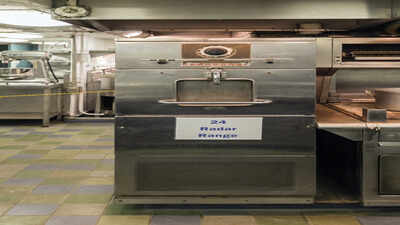

We instinctively grab our microwaves without giving them a second thought. The appliance is right there to help us quickly heat up our coffee in the morning or thaw our food before dinner, becoming an indispensable part of modern-day kitchens. However, it was not invented out of the need for convenience or speed by some chef brainstorming in his kitchen. Instead, the invention occurred in the midst of chaos in the pocket of a scientist during World War II.His peanut cluster bar in his pocket melted into a gooey mess. The normal response would be for one to grab a napkin and go on with life; however, Spencer was not satisfied with this simple explanation. While the magnetron did not emit heat, it still managed to melt his candy bar. This sparked the idea that turned this military detection tool into an appliance sitting on almost every kitchen counter in America.From melted snacks to a culinary innovationAs stated by the Smithsonian’s Lemelson Centre, this discovery made by Percy Spencer was not the end. Instead, it sparked another round of experimentation with the magnetron. He decided to experiment using popcorn kernels and witnessed them popping all around the lab space. Furthermore, he attempted to use a whole egg, causing his colleague’s face to be covered with egg yolk from the exploding egg.Through these experiments, conducted in good fun and using scientific rigour, he found out that microwave energy cooks food very quickly. Instead of warming up air, as an old-fashioned oven would, Spencer saw that he could apply these waves directly to the food. And thus was born the first ever “Radarange,” a large, fridge-sized device that cost thousands of dollars. For many years after, until the technology had reduced to smaller sizes and lower prices, the principle remained the same – applying the electromagnetic energy to organic materials.
 From a large, expensive “Radarange” to today’s compact appliances, the technology continues to evolve, revolutionizing food preparation and daily life. Image Credits: Wikimedia Commons
The science behind the quickness and safetyWhile there seems to be a lot of luck involved in Spencer finding the microwave, science has proven his theory right all along. In their report on electromagnetic fields, the World Health Organization writes about the primary biological effect of microwaves, which is heating. Upon encountering food, microwaves make the water molecules move very rapidly, resulting in friction that produces heat and cooks food instantly. This is the reason why the soup becomes hot within two minutes in a microwave oven, but takes ten minutes on a stovetop.With technological advances moving from the harshness of war into the comfort of our homes, new methods were developed concerning food management. In line with the WHO advice on food safety during the summer months, the microwave can be seen as a major force in ensuring hygiene, particularly while defrosting any frozen food products. By ensuring food is not within the danger zone, bacteria will not develop through food left at room temperature for hours. From its roots as an instrument to locate enemy planes, the microwave has become a household necessity.Even today, the technology continues to evolve. Research published in the Comprehensive Reviews in Food Science and Food Safety journal shows that scientists are still working to solve the “cold spot” problem using solid-state generators. We have come a long way from Spencer’s first messy pocket, but the heart of the invention remains the same.Not only did it change the way food was prepared, but it also affected the rhythm of daily life, allowing for TV dinners to be invented, helping mothers cook dinner quickly, and turning kitchens into efficient workplaces. And it certainly serves as a great example of just how important inventions may lie before us unnoticed, like a melted chocolate bar.