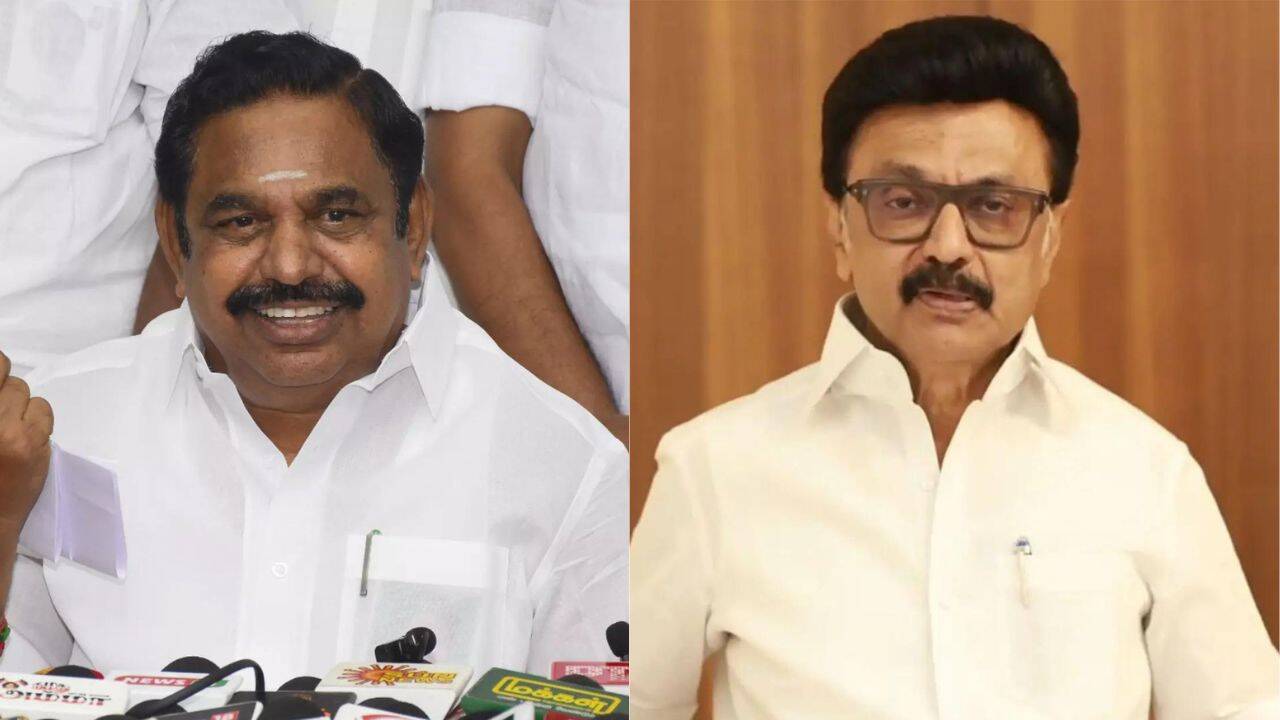
Politicians can make serious statements that make you laugh. One such came from a member of the anti-Edappadi K Palaniswami faction of AIADMK the other day. “This Vijay,” he told a reporter off the record, “can never be trusted.” He was complaining about TVK going back on its “promise” to induct members of the faction led by C Ve Shanmugam and S P Velumani into the government.


While I doubt if Vijay ever made such a promise, his use of the word ‘trust’ made me laugh. Will EPS trust this leader who is plotting his downfall? Will people trust anyone who was part of the conspiracy to bring together archrivals DMK and AIADMK to prevent C Joseph Vijay from being the chief minister? How does anyone trust the characters in the political intrigue that threw up, though momentarily, VCK leader Thol Thirumavalavan as a consensus candidate of the two Dravidian majors?
The 2026 assembly election not only brought a new politician to the top, but it also brought back the relevance of an old reality: anything can happen in politics. The DMK-AIADMK joint venture never took shape, but the fact that it was considered makes for a case study of politics as the art of the impossible.
This is not new. Tamil Nadu has always possessed a pragmatic streak beneath its theatrical politics. Alliances that seemed sacrilegious on Monday have become electoral arithmetic by Friday. DMK and Congress, once bitter opponents divided by language politics and accusations of northern domination, learned to coexist when the electoral map demanded it. Now, Congress has gladly abandoned DMK to join the Vijay govt.
DMK under M Karunanidhi had no qualms in supporting BJP when J Jayalalithaa pulled the rug from under A B Vajpayee’s feet in 1999. AIADMK sailed with the saffron in 1998, 2004, 2019 and again this time.
The phenomenon is hardly unique to Tamil Nadu. Indian politics is a living museum of improbable partnerships. In 1977, parties spanning ideological extremes came together under the Janata umbrella to defeat Indira Gandhi after the Emergency. Socialists, conservatives and former rivals discovered a common purpose.
Bihar is perhaps the most active laboratory of political recombination. Nitish Kumar’s JDU broke away from NDA in 2015 to join hands with long-time rival RJD and Congress to defeat BJP. In 2017, Nitish was back with BJP NDA; in 2022, he again jumped ship, only to later realign with BJP.
In Maharashtra, Shiv Sena, which shared the Hindutva agenda with BJP, parted ways after the 2019 election and formed the Maha Vikas Aghadi govt with NCP and Congress. Jammu & Kashmir witnessed one of the strangest marriages of convenience. After the 2014 assembly polls threw up a hung assembly, “ideological rivals” BJP, which made gains in Jammu and PDP that won a majority of the seats in the Kashmir valley, negotiated an ‘agenda of alliance’ and formed a coalition govt in March 2015.
The vocabulary is familiar. One alliance is justified in the name of “secularism”. Another in the interest of “stability”. A third becomes necessary to “save democracy”, “protect federalism” and – don’t laugh – “respect people’s verdict”.
Back home, the idea of a consensus figure — even the fleeting mention of someone like Thol Thirumavalavan as an acceptable bridge — showed how rapidly political imagination expands when power appears threatened. The public gasps at the proposal, parties deny it, backchannels hum, and soon the extraordinary begins to sound inevitable. What begins as rumour is first dismissed as immoral, then defended as practical and finally presented as statesmanship.
In the script called politics, friendship and rivalry are often written in pencil – with an eraser at the other end.
Disclaimer
Views expressed above are the author’s own.
END OF ARTICLE