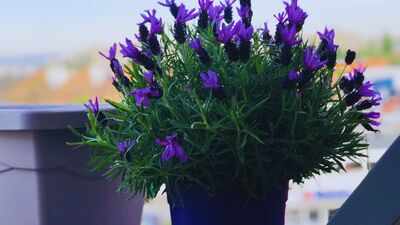

What can be sweeter than the smell of lavender on a balmy summer evening! This purple beauty is one of the most loved flowering herbs in the world. Its soothing fragrance, elegant purple flower spikes and silvery-green foliage add beauty, pollinators and a touch of the Mediterranean to even the smallest outdoor space. Be it a sunny apartment balcony in New York, a compact patio in London, a terrace in Bengaluru or a balcony garden in Delhi — with the right care, lavender can flourish. Lavender (Lavandula) is native to the Mediterranean basin and is naturally adapted to hot, dry summers and well-drained soils. This makes it an excellent container plant in much of Europe, many parts of the U.S. and several regions of India. But the growing conditions vary so much from one region to the next, and knowing your local climate is the key to success. Yogendra Sharma, a retired IPS officer who has been growing lavender since the last 30-years says “The plant may initially be a handful to handle, but once you know how to take care of it, it will remain a forever fixture in your home.”We spoke to gardening experts, homemakers who love gardening and professional gardeners and based on our interaction with them here’s an A-to-Z guide to growing healthy, fragrant lavender in containers.
 It can be easily grown in balconies with the right gardening tips-Canva
Lavenders have variety too. Not all are sameNot all lavenders do equally well in all climates.For the U.S.
- English Lavender (Lavandula angustifolia) does very well in cooler climates like the Northeast and Pacific Northwest.
- Lavandin (Lavandula×intermedia) types such as ‘Grosso’ are prolific bloomers and are grown in California and other warm states.
- Spanish Lavender ( Lavandula stoechas) thrives in the warmer southern states.
For the EU
- English lavender is widely grown across the UK, France, Germany, and northern Europe.
- French and Spanish lavender can also be successfully grown in Southern European countries such as Spain, Italy and Portugal.
For India :
- Spanish Lavender and French Lavender (Lavandula dentata) generally do better in the long heat of India than English lavender.
- If cared for, English lavender can still thrive in the cooler hill stations and northern plains.

Lavender thrives in warm weather-Canva
Buy a healthy plant Lavender can be grown from seed, but beginners will find it much easier to buy a healthy plant from a nursery. If you are choosing the plant look for- bushy, compact habit, silver or bright green foliage, no leaves turning yellow, sturdy stalks, no signs of pests. Seedlings take a lot longer to get established than healthy plants.Pick a good container Lavender hates wet roots more than just about anything else. Select a pot 10–14 inches (25–35 cm) in diameter, preferably made of clay or terracotta and with more than one drain hole. Terracotta allows excess moisture to evaporate, reducing the risk of root rot. Drainage is keyLavender is a natural inhabitant of rocky hillsides with rapid water run-off. Add the right potting mix with 40% quality potting mix, 30% coarse sand, 20% compost 10% perlite, pumice or fine gravel. Avoid heavy clay soils or moisture retentive mixes for tropical plants.It needs sunlightLavender is a real sun-worshipper. It needs: 6-8 hours of direct sunlight a day so South- or west-facing balconies should be preferred. Maximise sun exposure in the UK and northern Europe. In India, especially in cities like Delhi, Jaipur, Ahmedabad and Hyderabad, the hot afternoon sun during peak summer can stress container plants. A light shade in the hottest part of the day may prevent scorching without greatly reducing flowering.

Lavender proves that you don’t have to have a sprawling country garden to enjoy one of the world’s most iconic flowering herbs-Canva
Feed lightlyMona Sharma who owns a nursery in East Delhi says, “Lavender is not like most flowering plants, and prefers poor soil. Too much fertiliser yields lush green leaves and very few flowers. Apply compost one or two times during the growing season Or half strength balanced slow release fertiliser every six to eight weeks. Don’t use high nitrogen fertilisers. Lavender plant, despite its small size, has an extensive root system. Re-pot every two to three years when the roots begin to circle the pot or poke out of the drainage holes. Use a container just one size larger than the previous one.” Heat is usually an assetLavender likes the heat. Ideal temperature is 60-85°F (16-29°C). It needs higher temps with good airflow and careful watering in the United States. Lavender grows well in California, Arizona, Utah, Colorado, Oregon and Texas. Across Europe Southern France, Spain, Italy, Greece and Portugal have near perfect conditions for growing the herb. In India lavender can happily grow in Bengaluru Pune Hyderabad Chandigarh Jaipur Delhi (with caution in summer watering), Uttarakhand and Himachal.Excess humidity encourages fungal diseases so highly humid coastal cities such as Mumbai, Chennai, Kochi and Kolkata may pose more challenges. Early detection avoids serious problems. Overwatering is the most common way to kill lavender. Water every 2-3 days for the first few weeks. Water only when the top 2-3 inches of soil feel dry. Good air circulation helps prevent fungal diseases.

A well drained soil is extremely important (Canva)
PruningPruning keeps plants tight. Deadhead flowers throughout the summer. At the end of the blossoming season, trim some third of the green soft growth, never prune into old woody stems. Pruning every year can work wonders in the life of the plant.Mulching done rightInstead of moisture-retaining bark mulch, try: gravel small stones and decorative stones. They help drainage and reflect heat back onto the plant.Lavender growing is not the same everywhere.United States of AmericaSpring planting gives the best results, winter protection may be required in colder northern states.EuropeThe best time to plant is in spring and early autumn, winter is generally good for dormant plants.IndiaPlant in many areas after severe summer heat or in early winter, keep containers covered during prolonged monsoon rains.

Lavender Tea-Canva
Pollinator paradise Lavender draws in:
- Bees
- bumble bees
- Butterfles.
- Native solitary bee species
Home-grown lavender can be:
- Dried flower arrangements
- Potpourri
- Sachets for closets
- Crafts of Herbs
- Bath salts
- Candle
- Flower Arrangements
For food or tea, only culinary varieties are to be used.Airflow is good even on sunny balconies. Don’t plant lavender next to walls where hot, stagnant air can collect. Beware of monsoon or rainy summers. The worst enemy of lavender is prolonged wet weather. In India’s monsoon season, and rainy parts of Europe or the eastern U.S. :
- Move pots to shelter if possible.
- Less water.
- Better draining it.
- Cut off damaged leaves promptly
During its first growing season, lavender often concentrates on root development. In the second year the flowering is far more abundant.

Lavender is grown best in earthen pots-Canva
Errors to avoid
- Whatever your location, steer clear of these mistakes:
- Over watering
- Growing in the shade
- Use of heavy garden soil
- Too much fertilzer
- Not pruning every year
- Choosing pots that do not have drainage holes
- Letting rainwater collect around the roots
- Plants in a humid corner with no air flow
Lavender proves that you don’t have to have a sprawling country garden to enjoy one of the world’s most iconic flowering herbs. California vineyards and French cottage gardens, English balconies and Indian terraces, this hardy Mediterranean plant takes to container life remarkably well, given what it loves best: sunshine, fast-draining soil and restraint with watering. Whether you’re designing a pollinator-friendly patio in the US, adding scent to a European courtyard, or brightening an urban balcony in India, lavender offers beauty, versatility and months of blooms with little effort. The right variety, combined with climate-specific care, can turn even a small outdoor space into a fragrant summer escape.