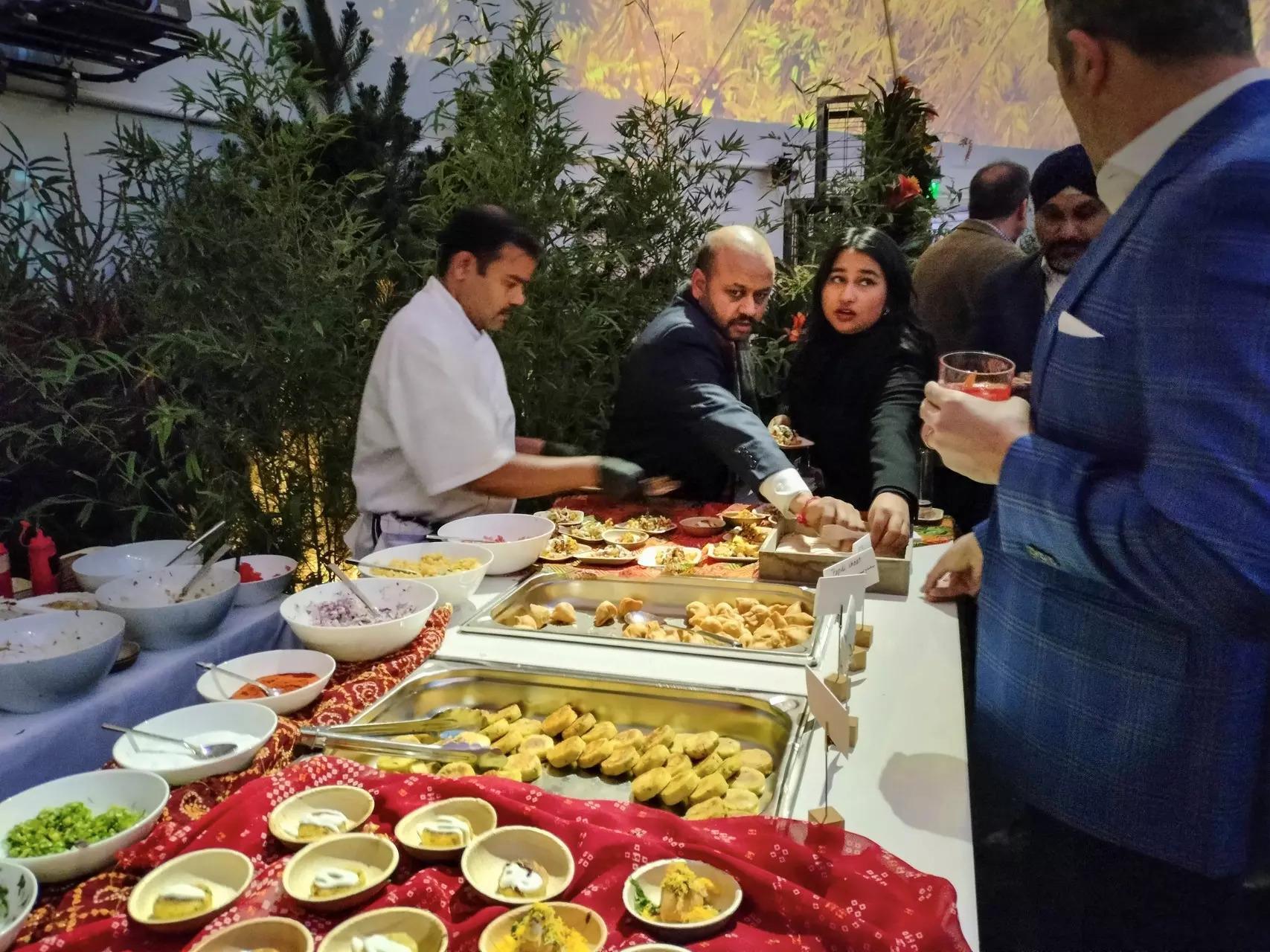
Thanks to chaat, Indian cuisine is literally streets ahead of the competition


India’s food is as varied as are its people, in their customs and their clothes, their languages and their creeds.
Among this daunting diversity, there are some commonalities. The most obvious of these, of course, is democracy. Another is Bollywood.
With its swooning romance and sobbing heartbreak, its high drama and slapstick comedy, its heroic derring-do and base villainy, a Bollywood blockbuster has something for everyone, a seasoning for all tastes, and a taste for all seasons.
Indian street food is Bollywood in edible avatar, combining with irresistible zest the savoury and the sweet, the fire of spice and the coolth of curd, harmonising varying tastes and textures into a symphony of savour, full of the vitality and emphatic energy of urban India.
This year’s MasterChef Australia contest was won by an Indian-origin contestant whose entry, Katori Chaat – a lattice-work bowl of flour and potato filled with mashed chickpeas mixed with yogurt and drizzled with a date and tamarind reduction, all topped with a mint-coriander chutney – was lauded by the judges as being “fun and vibrant” with a remarkable “depth despite being entirely vegetarian”, pipping at the post rivals in the form of Butterfly Trout, Oxtail Ravioli, and Quail.
This is not the first time that Indian street snacks, generically called chaat, have been accorded accolades on the globally-watched TV show.
Previously, a Delhi-born chef proved a winner with his take on the Raj Kachori, a jumbo-sized poori stuffed with a mixture of potato, sprouts, chickpeas, dahi, a medley of chutneys, and a sprinkling of crisp sev as a topping. A veritable feast for the eyes as well as the tastebuds.
What in western India is called panipuri has also made the honours list on the Australian show, and deservedly so as it merits being hailed as the wholly trinity in the world of chaat, having no fewer than three names to its credit.
Called panipuri in Gujarat and Maharashtra, in north India it’s called golgappa, and in Bengal its alias is puchka.
A mouthful in more ways than one, this street food will give the international culinary community much to chit-chaat about.
Disclaimer
Views expressed above are the author’s own.
END OF ARTICLE