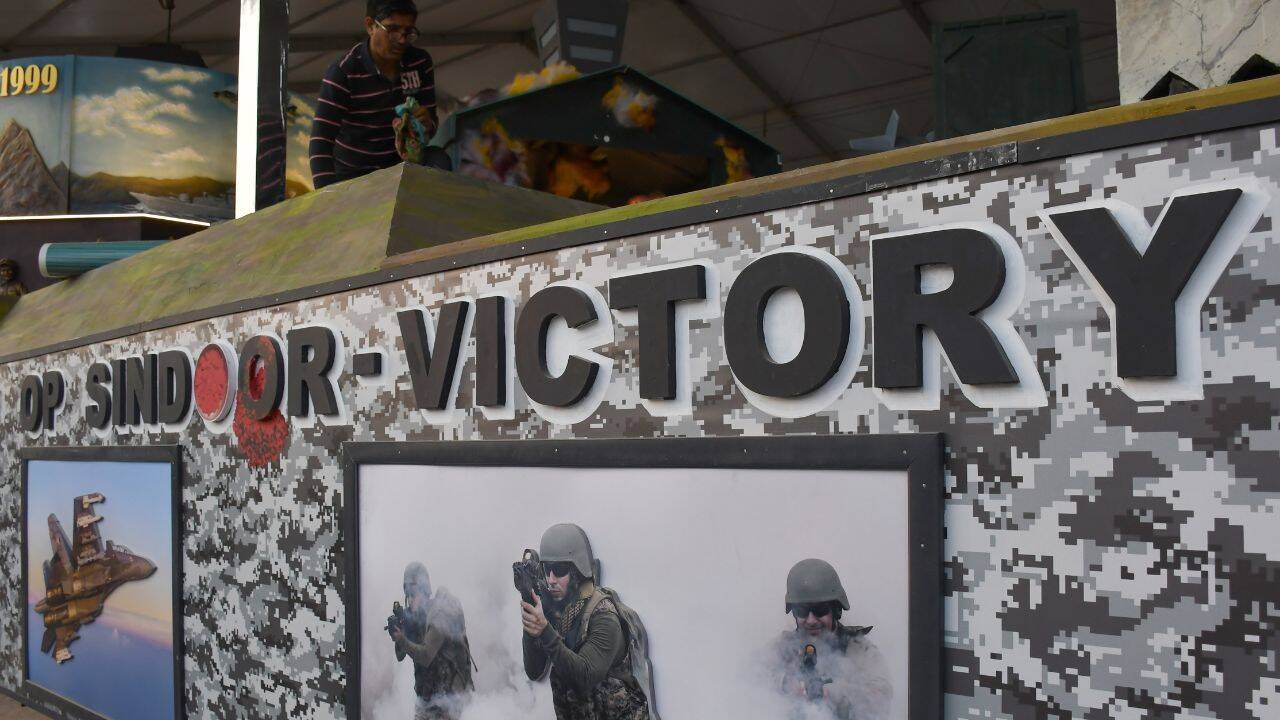
A year after Operation Sindoor, the contours of India’s response in May 2025 appear less as a moment of rupture and more as a confident consolidation of an evolving strategic outlook. Triggered by the Pahalgam terror attack that killed 26 civilians, New Delhi’s actions were not simply reactive; they were measured, deliberate, and designed to signal that India now possesses both the capability and the political will to defend its interests. In retrospect, Sindoor stands out as a moment where intent and capacity aligned with unusual clarity.
At the operational level, the most striking feature was the maturity of India’s military coordination. For a system often criticised for inter-service silos, the seamless integration of the army, navy, and air force under the chief of defence Staff suggested that India is capable of orchestrating complex, multi-domain operations under pressure. This was complemented by the effective use of indigenous systems, indicating that the push for self-reliance in defence is beginning to translate into tangible battlefield advantages. This has strengthened confidence in India’s capacity to sustain such capabilities over time.
Equally significant was the expansion of battlespace. By striking beyond the Line of Control into Pakistan’s strategic depth, India demonstrated that the constraints imposed by nuclear deterrence are not as rigid as once assumed. Rather than being paralysed by escalation risks, New Delhi showed that carefully calibrated conventional operations can impose costs while maintaining control. The maritime dimension reinforced this shift, with naval deployments extending the operational canvas.


New Playbook: The battle is over the but the battle of narratives has been almost as significant
The diplomatic aftermath of Sindoor has further underlined this growing confidence. India’s approach toward Pakistan has become more coherent, moving toward a framework where engagement is clearly conditioned by behaviour. By linking previously insulated domains, such as water and connectivity, to the broader security context, New Delhi has signalled that the costs of supporting proxy violence will be multidimensional and not merely punitive.
The international response to Sindoor continues to offer important clues about India’s external environment. The US, in particular, appeared to accept India’s framing of the operation as counter-terrorism rather than interstate escalation. But a year on, it is clear that this ‘acceptance’ was conditional rather than transformative. Indeed, the episode has exposed the persistent transactionalism in India-US ties.
For Washington, India is an important strategic partner in the Indo-Pacific, but that partnership has limits when it comes to crises involving Pakistan. This became evident in the controversy surrounding Donald Trump’s claims that he had facilitated the ceasefire. Whether accurate or not, such assertions complicate India’s carefully crafted narrative of strategic autonomy. New Delhi has long resisted any suggestion of third-party mediation, particularly on issues linked to Kashmir. Even the perception of external involvement risks diluting the message Sindoor was meant to send. Since then, this claim has cast a lingering shadow, with India-US ties continuing to be shaped, however subtly, by the overhang of that episode.
For Pakistan, these claims provided a degree of diplomatic relief. The suggestion of US involvement, however tenuous, reinforces its long-standing effort to internationalise disputes with India. In that sense, the battle over narratives has proven almost as consequential as the operation itself. Sindoor was designed to establish a new logic of deterrence, but its interpretation remains contested. Did India succeed in imposing costs unilaterally, or was de-escalation ultimately brokered under external pressure? The ambiguity serves Pakistan’s interests and complicates India’s attempt to redefine the terms of engagement. Yet, while Rawalpindi has sought to leverage international narratives, the operational outcomes of Sindoor have reinforced the costs of its long-standing reliance on proxy actors. The shift toward a more hardened bilateral equation reflects not just India’s resolve, but also a recalibration of expectations in Islamabad about the space for deniable aggression.
China’s reading of Sindoor further highlights India’s growing strategic confidence. The performance of Chinese-origin systems in Pakistan’s inventory has inevitably drawn attention, but more importantly, India’s willingness to act across domains signals a readiness to operate under complex conditions. For Beijing, this adds a new dimension to its assessment of India, not merely as a continental challenger, but as a more versatile and capable strategic actor.
A year on, what emerges is not a rigid doctrine but a clearer pattern of behaviour. India has demonstrated a willingness to employ force in a calibrated and purposeful manner, enhancing deterrence while preserving flexibility. Operation Sindoor, therefore, stands as a marker of India’s strategic coming of age. The challenge ahead will be to sustain this balance, ensuring that assertiveness is guided by prudence.
Disclaimer
Views expressed above are the author’s own.
END OF ARTICLE