A tournament full of excellent goalkeeping has still found room for a Swiss man to make himself unavoidable. Gregor Kobel has kept two clean sheets in five appearances and then became Switzerland’s shootout hero against Colombia, saving Cucho Hernández’s penalty and turning one good leap to his left into national folklore.
Switzerland had not reached a World Cup quarter-final since 1954, which in Swiss terms is almost impolite levels of historical delay. Kobel helped drag them out of that long, orderly, last-16 purgatory. It was the sort of performance that makes a goalkeeper less a player and more a national infrastructure project.
Right-back: Achraf Hakimi (Morocco)
Achraf Hakimi is what happens when a full-back decides the job description is too small. The PSG man has created 16 chances so far, a ridiculous number for someone who is also expected to remember that defending exists.
He is also one of the great symbols of modern diaspora football: born in Madrid, shaped by Spain, emotionally tied to Morocco and now captaining one of the tournament’s great stories. Morocco’s squad has been built across borders, languages and football cultures, and Hakimi is its cleanest summary. Full-back, playmaker, captain, emblem. Most teams would be happy if their right-back did one job properly. Morocco’s does four.
Centre-back: Dayot Upamecano (France)
France’s attack has taken most of the headlines, as attacks usually do. Goals get the poetry. Defenders get the blame. Somewhere behind Mbappé, Olise and the rest of the French forward line, Dayot Upamecano has been doing the unglamorous work that allows the fireworks to continue.
He has started all five of France’s matches and gives Didier Deschamps’ side the recovery pace and physical security required when a team attacks with imperial confidence. His full name, Dayotchanculle Oswald Upamecano, is also a reminder that the French football machine is built from layered identities, migrations and histories. He is the defender who lets France believe in freedom.
Centre-back: Cristian Romero (Argentina)
Cristian Romero has one goal in the tournament, but it was the goal that began Argentina’s comeback from 2-0 down against Egypt. For a defender, that is the difference between a solid tournament and a place in the montage.
Known as Cuti, Romero gives Argentina the necessary menace behind all the Messi romance. He plays as if every duel is personal, every clearance is a verdict and every opposition forward has committed a minor moral offence. Argentina have the miracle worker in front. At the back, they have the man who makes sure nobody gets too comfortable while the miracle is being arranged.
Left-back: Noussair Mazraoui (Morocco)
On the left, we also have Hakimi’s Moroccon teammate Mazraoui who edged out Spain’s Cucurella because of the Vine’s slight Manchester United bias. Mazraoui is one of the players who has ensured that Morocco remains unbeaten in this World Cup and adds the diaspora touch given that he was born in Netherlands.
Central midfield: Declan Rice (England)
After a season that saw haramball win the Premier League, Declan Rice has brought his unique skills to the world stage. Rice gets in because this XI requires at least one adult in midfield. With Messi, Mbappé, Kane, Haaland and Bellingham floating around, someone has to stop the whole enterprise from becoming a school playground with elite finishing.
Rice’s tournament has been about ballast. He covers space, wins second balls, protects England’s shape and lets Jude Bellingham arrive in the box with the timing of a man who has never once doubted his own trailer music. Rice’s international journey, from Ireland’s youth set-up to becoming one of England’s most important players, also makes him one of football’s quieter identity stories. Every circus needs a tent pole. For England, that is Rice.
Central midfield: Jude Bellingham (England)


Yes we know the team isn’t balanced, and it feels like sacrilege to have two Englishmen in midfield but hear me out. Bellingham has four goals from midfield, including two in England’s wild 3-2 win over Mexico at the Azteca. That is striker-level production from a player who is also expected to press, carry, tackle, connect play and occasionally behave as if England’s emotional wellbeing is his personal responsibility.
And it’s not just his attacking prowess but the intensity with which he has defended that he makes the cut.
Right wing: Lionel Messi (Argentina)
Before the World Cup, people asked if Messi could still do it on the world stage. After 8 goals, two inspiring comeback wins and 16 chances, no one is asking if, but when Messi will score. Except when he takes penalties because the world’s greatest player is somehow very, vey average from the spot. Even as his rivals have faded or knocked out, Messi’s swansong continued like a Dylan Thomas poem.


Left wing: Kylian Mbappé (France)
Anyone who has been on Football Twitter or Instagram would have seen the Dictator Mbappe memes and that’s how he’s playing as France cut a swathe through the tournament like Napolean marching through Europe. The boy prince has become the main man and if France looks absolutely terrifying, it’s because Mbappe hits a different gear whenever he plays at a World Cup.
Striker: Harry Kane (England)
Harry Kane has six goals and one assist, and remains England’s safest answer to the oldest tournament question: where will the goal come from? But it’s not just Kane’s goals but the way he’s playing. He was instrumental in the come-from-behind win against DR Congo and the backs-to-the-walls showdown in the Azteca against Mexico. If England do manage to bring it home, you can bet it will be because of Harry Kane.
Striker: Erling Haaland (Norway)


The funny thing is that Erling Haaland could have played for England if he chose to because the Viking warrior was actually born in Leeds when his father played in the Premier League. Haaland’s extraordinary talents have always been apparent to anyone who has watched European leagues, but the way he has vanquished Norway’s opponetns into the mighty Brazil suggest that he could just bring back the plundering ways of the Vikings. Now England need to figure out how to stop a man who was born in Leeds. Funnily enough, off-the-field, Haaland has gone viral for his wholesome social media game, his resemblance to Maajin Buu and his love for butter chicken.


Postscript by Prasad Sanyal


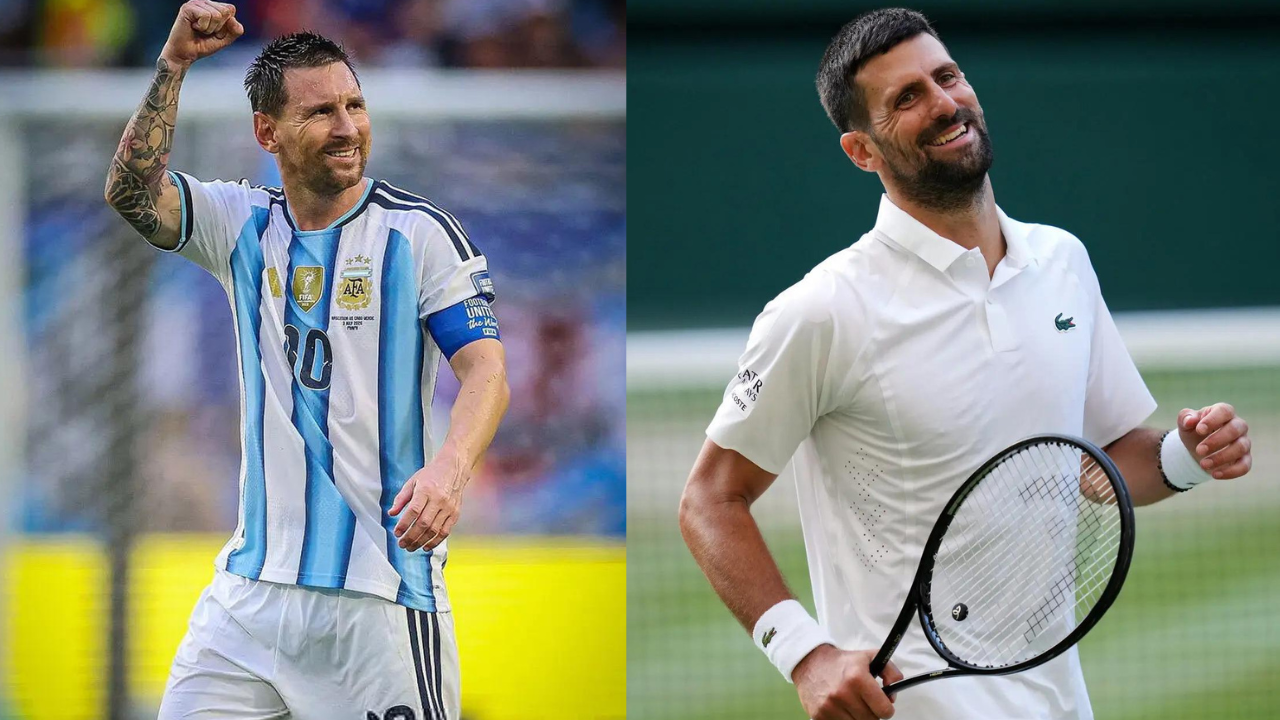
At some point, very quietly, the world decided that thirty-nine was no longer an age but a warning label. In sport it is meant to be the beginning of the soft exit: the ambassadorial smile, the carefully managed minutes, the documentary crew arriving while the violins tune up for one last montage. In professional life it is the point at which people start using the word reinvention with the expression of a dentist introducing the subject of a root canal.
Lionel Messi, being Lionel Messi, appears not to have received the circular. This is a document I know well, having been cc’d on it several times myself.
Argentina were two goals down to Egypt in Atlanta, a quarter of an hour from the exit, and the football world had already begun reaching for its obituary adjectives, the brave, glorious, final vocabulary people reserve for burying you politely. Messi had seen a first-half penalty saved by Mostafa Shobeir, his second miss of the tournament, which made him the only man ever to miss two spot-kicks in a single World Cup.
For one uncomfortable stretch he looked almost human, which is always alarming in a player who has spent two decades treating physics as a mid-level functionary. Then Romero scored, from a ball Messi had threaded. Then Messi scored. Then Enzo Fernández headed in during stoppage time, and the old man had not merely survived the evening but quietly rearranged its furniture. Shakespeare, who knew something about late acts, has Edgar conclude in Lear that ripeness is all. Messi seems to have read this not as a meditation on mortality but as a team-talk.
A few hours later Novak Djokovic walked onto Centre Court and spent five hours and fifteen minutes establishing that tennis, too, has a paperwork problem with age. Against Félix Auger-Aliassime, twelve years his junior and seeded above him, in the longest quarter-final in Wimbledon’s history, Djokovic lost the thread, found it, lost it again, and settled the thing in a fifth-set tie-break with the calm of a man who has done this in every time zone. Yeats grumbled that an aged man is but a paltry thing, a tattered coat upon a stick, unless soul clap its hands and sing. Djokovic’s soul, on the evidence of that final breaker, remains in irritatingly good condition.