
Imagine packing your bags for a holiday, hoping for an adventure of a lifetime — only to return with a kind of ordeal that turned your life upside down!Lowri Denman’s story sounds like something straight out of a medical drama — like one of the challenging episodes from ‘House’ where the mean yet genius diagnostician figures out the disease at the 11th hour. Now, ‘House’ might be a fictitious medical drama, but Denman’s stint with her disease and diagnosis is not. What started as a spirited backpacking adventure through India in 2007 became a full-blown health crisis that stole a decade of her life.But what exactly happened?
What happened to Lowri Denman?
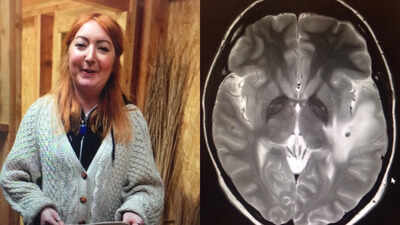
Lowri, a Cardiff woman who’s now 42, recently opened up about her experience of a trip she remembers fondly for its culture and experiences, which ultimately became the beginning of a prolonged health crisis that made her thirties a rollercoaster ride — and not in a very enjoyable way.Per the BBC, she headed off with a friend for two months of travel, hoping for nothing more than memories and new experiences. She soaked up the culture and tried to be careful with her food, sticking to a vegetarian diet to dodge the usual travel bugs and stomach troubles. She got home safely, and for four years, life carried on as usual. She thought she’d come back with just photos and stories.That was before everything changed.Out of the blue in 2011, Lowri went to the bathroom and passed something she never expected: a tapeworm over a meter long!It was horrifying, sure. But when she visited the doctors, they assured her it was dealt with. Nobody guessed what was left behind: something infinitely more dangerous hiding deep in her brain.A few months later, her health took a turn for the worse.She started getting brutal headaches as she’d never felt before. Then one day, her speech slipped away. Next thing she knew, she woke up in an ambulance after her first seizure. That seizure was only the beginning.“I was really starting to struggle getting some words out,” Lowri said, adding, “The next thing I came around and I was in an ambulance and I was like ‘how has that happened? Why?'”Doctors scanned her brain, trying to understand what was going on.The result? They found 38 parasites lodged inside her brain.Not one, two, or even 10 — 38 paraistes inside her brain!It took months of specialist consultations, tests, and panic for doctors to land on a diagnosis: neurocysticercosis, a rare and serious infection by the larvae of the pork tapeworm, Taenia solium.
What is neurocysticercosis , exactly?
Neurocysticercosis is a condition so rare that people rarely hear about it unless it’s happened to them or someone they know. It’s a parasitic infection of the central nervous system caused by the larvae of the pork tapeworm.However, you don’t have to eat undercooked pork to get it, either. Turns out, the real risk is swallowing invisible eggs from contaminated hands or food. Once they’re inside, the larvae can migrate to the brain, form cysts, and trigger all sorts of neurological chaos.
What are the signs of this disease?
Well, for starters, seizures are the most common symptoms occurring in patients. Then come chronic headaches, memory problems, and confusion–all on the list.For Lowri, it explained the sudden seizures, anxiety, and mental struggles that started to take over her life.
How Lowri Denman battled neurocysticercosis
After locking the diagnosis, the cycle of treatment finally began.“It looked absolutely disgusting, like Sellotape with like little ridges in it,” said the 42-year-old Cardiff woman.Doctors tried aggressive anti-parasitic medications, including albendazole and praziquantel, trying to kill the parasites without causing brain swelling as the cysts died. To control inflammation, Lowri had to take steroids, and those brought their own problems. Her physical health crumbled, but that was only part of the story. Losing her independence was devastating.She couldn’t drive anymore because of the risk of seizures. Walking out the door felt risky, since another seizure could hit at any point. She was told not to do things on her own. Repeated seizures left her fearful of leaving home, and her everyday life shrank. Anxiety and uncertainty became her constant companions.The medical side was a slog. Swelling flared up again and again. However, for a period, doctors thought that the treatment was working. If only the road to recovery proved anything but straightforward!In 2015, the parasites lingered stubbornly, and Lowri got sicker. She left her job, moved back in with her family. She said, “I was getting more and more ill, more anxious. I had to give up work, had to move home to be taken care of, and then it got to a point where I went on Personal Independence Payments (PIP), and I wasn’t capable of filling out the forms on my own.”“For someone that’s extremely independent and capable and lived on my own most of my life, I was like, what the hell is going on here?” she said.That loss of control hit hard.It wasn’t just her body that took the beating. Years of illness, relentless symptoms, powerful drugs, and the uncertainty of not knowing if she’d ever get better — all those things took hold of her mind.Lowri said, “I just wanted to go back to work. I just wanted a normal life, and I didn’t feel comfortable being in social settings. I didn’t want to leave the house, really. The swelling was coming back and forth all the time, so they were trying to figure out what medication to put me on.”She added, “They put me on methotrexate, then, which is a chemotherapy drug, so I was worried my hair was going to fall out. It made me really tired, but then steroids would make me really energetic, so there was loads going on, on top of the worries of not getting better.”At one point, the steroids changed everything, giving her bursts of energy and then switching off, a rollercoaster she couldn’t step off. She spiraled into deep anxiety, panic attacks, even paranoia and psychosis. The line between what was real and what she feared blurred.In 2016, her condition became so serious that she had to be admitted to a neuropsychiatric ward, where she spent three months receiving treatment. Apart from medications for her neurological condition, she was prescribed mood stabilisers and antipsychotic drugs.At that point, she was really scared for her life. “I was having panic attacks. I thought I was going to die, I think, and then that turned into paranoia, and then the psychosis came out. I wasn’t stable at all, all these thoughts and crazy things were going on in my head,” she recalled.Recovery took time. But little by little, things started to shift.By early 2017, Lowri left the hospital, and, over time, her seizures came under control. Now, she hasn’t had a seizure for about a decade. The parasites have calcified, and they’re still visible in brain scans. However, her condition is stable. She’s managed to carve out a new normal, one where she’s active, and her independence has slowly returned.
Where’s Lowri Denman now?
For what it’s worth, Lowri is in much better health now. All those years battling with her body and mind left scars, but her determined not to let them be the end of her story. Now that she’s healthier, she’s channeling her experience into a podcast with her friend and producer Nicola Brown. It’s titled “38 Parasites” — talk about irony!Looking back, Lowri doesn’t want to let her thirties be defined by fear and illness alone. “I spent my whole thirties being ill and anxious and worried, and now I’ve moved into my 40s, I want to do something positive with that negative thing — help other people, and not just feel like I’ve lost all of this time.”Together, they’re hoping to raise £25,000 to bring a 12-part series to life, telling her story and spotlighting experts in tropical diseases, neurology, and mental health. The idea is to help others facing similar struggles and to make sure that neurocysticercosis is something people hear about before it flips their lives upside down.