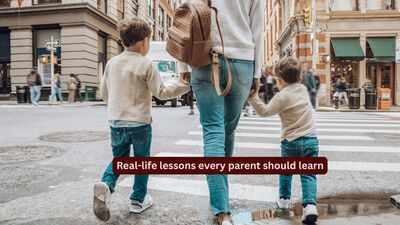

Every parent wants the best for their child. Yet, sometimes, the habits parents see as discipline or guidance can slowly affect a child’s confidence, emotional security and relationship with them. According to educator Vijendra Singh Chauhan, toxic parenting is not always intentional. Often, it hides in everyday behaviours such as constant criticism, comparison, emotional blackmail and excessive control.Speaking about what healthy parenting truly looks like, Chauhan says emotional safety should come before everything else. “People often say that a small child falls asleep in your lap because they are very sleepy. But that isn’t the reason. A child falls asleep in your lap because they feel safe there,” the educator says.
How do you teach children about money and financial responsibility?
He believes parents are a child’s first source of both physical and emotional security. “Safety- both physical and emotional- is what children come to their parents for.” For him, unconditional love is the foundation of a healthy parent-child relationship. “The first condition of good parenting is that love should not be tied to conditions. It should be unconditional, and it should provide emotional safety,” he adds.

Image: Canva
Children need room to become themselves
As children grow, Chauhan says parents must recognise that independence is a natural part of development- not an act of disrespect. “When children reach adolescence, or grow a little older, they will not do, or want to do, exactly what their parents want. They need a sense of autonomy. In fact, I would say they even need a healthy rebellion.” He explains that children should be able to express opinions different from their parents. “Children should have the space to say, ‘No, I don’t want this. I want something else.’ They should be able to say, ‘This is your opinion, but I want to choose differently.’” According to him, this freedom helps children become confident adults. “This healthy rebellion is what helps young people become who they are.” He further adds, “If a child has the opportunity to express disagreement, they become a better decision-maker in the future.”
Stop comparing children
Comparison, Chauhan believes, quietly damages trust between parents and children. “Can we celebrate our children’s small achievements without comparison and without envy?”According to him, parents should appreciate even small milestones instead of measuring children against siblings, cousins or classmates. Just as importantly, parents should take children’s seemingly small concerns seriously. “You have to listen to the small stuff with genuine interest. Be a good listener. And when I say listening, I mean listening with genuine interest. Pay enough attention to the little things your child tells you.”

Image: Canva
The everyday habits that may be hurting children
According to Chauhan, one of the biggest signs of unhealthy parenting is constant criticism. “The most worrying thing is chronic criticism and shaming.” He points out that many children grow up hearing they should try harder or that someone else has done better. “In Indian families, it is very common for children to be constantly criticised and told, ‘Try harder. You could have done better. Look at someone else, they’re doing so well, but you’re not.’”He adds that shaming often goes beyond academics. “Shaming can be about physical appearance, performance or behaviour.” While parents may believe they are correcting mistakes, Chauhan says the long-term impact can be much deeper. “You may think you’re correcting a small mistake, but you are paying a much bigger price. Deep down, the child begins to dislike you, and their trust in you starts to crack.”
Love should never become a weapon
Another behaviour Chauhan warns against is emotional manipulation. “Emotional blackmail is one of the strongest tools in Indian families. It almost never fails.” He says many children grow up hearing emotionally loaded statements. ”’If you do this, I will die. We will be ruined.’ We hear such statements again and again in our society.”According to him, parental love should never be used to make children feel guilty. “You love your child. You care for them. That’s a wonderful thing. But you cannot use that love as a weapon. You cannot use it to emotionally blackmail your child.”
What happens when children no longer feel emotionally safe?
According to Chauhan, children who constantly experience criticism, guilt or control often begin withdrawing from their parents. “Children begin avoiding this relationship. They begin moving away from it. Gradually, anxiety settles inside them. A kind of chronic guilt settles inside them. They begin avoiding situations where they might have to face their parents because they feel that if they talk, it will lead to conflict.”
A message for parents
Chauhan says parenting is not about always having the right answers but about being willing to reflect and learn. “Sometimes we need to take accountability. Maybe we should simply say, ‘We don’t know.’ Not knowing is absolutely fine.”He concludes with a reminder that children’s emotional well-being should never come at the cost of maintaining unhealthy family dynamics. “If we have created a healthy family environment, children will never need to distance themselves. But if the environment is unhealthy, and we expect the next generation to sacrifice their well-being, their mental health, their safety and even their lives just to keep accepting adults’ manipulation, then we are not talking about a healthy society.”