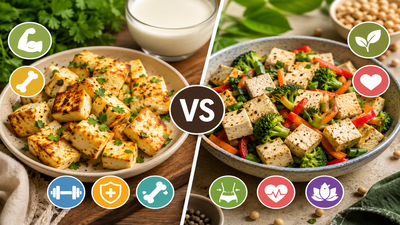

At first glance, paneer and tofu sit in the same section of the plate. Both are soft, versatile, and easy to turn into a satisfying meal. Both carry the label of “healthy protein.” But once you look a little closer, they begin to tell two very different nutrition stories. Paneer is rich, creamy and deeply familiar in Indian kitchens. Tofu is lighter, subtler and often chosen for plant-based eating. So which one is actually better for health? The honest answer is that it depends on what your body needs. Paneer and tofu are not rivals so much as different tools. One may be better for muscle gain, another for weight management, another for lactose intolerance or heart health. The better choice is the one that matches your goal. Scroll down to read more…
What paneer brings to the plate
Paneer, or Indian cottage cheese, is made by curdling milk and straining the whey. Because it comes from dairy, it is naturally rich in protein, calcium and fat. A 100-gram serving of paneer typically provides around 18 to 20 grams of protein, 250 to 320 calories, 20 to 25 grams of fat and only a small amount of carbohydrates. It also delivers calcium, phosphorus and vitamin B12 in meaningful amounts, though exact values vary by brand and preparation.That makes paneer especially appealing for people who want a filling, calorie-dense protein source. It is often used in vegetarian diets because it helps meet protein needs without meat. Its texture also makes it easy to add to curries, wraps and snacks without much effort.

But paneer has a nutritional trade-off. It is usually higher in saturated fat than tofu, and because it is a dairy product, it is not suitable for people who are lactose intolerant or avoiding animal products. For someone watching cholesterol or total calorie intake, paneer can still fit into the diet, but portion size matters.
What tofu offers instead
Tofu is a food product that is created by curdling soy milk and then pressing the curds into firm blocks. This versatile ingredient is significantly lower in calories compared to paneer and generally contains approximately 8 to 12 grams of protein per 100 grams, varying based on both the firmness of the tofu and the specific brand. Typically, tofu has around 70 to 120 calories, with a fat content of about 4 to 7 grams and an exceedingly small amount of carbohydrates.That lower calorie count is one of tofu’s biggest advantages. It allows people to eat a larger volume of food while keeping the meal relatively light. For weight-conscious eaters, that can make a real difference. Tofu is also naturally cholesterol-free and usually lower in saturated fat than paneer, which makes it appealing for heart-conscious diets.

Its protein is complete, meaning it contains all nine essential amino acids, just like dairy protein does. Tofu also brings its own set of benefits from soy, including isoflavones, which have been studied for their possible role in heart health and menopausal comfort. For vegans, people with lactose intolerance, or anyone reducing dairy, tofu is often the more practical choice.
Protein, calories and health goals
If your main goal is muscle building or simply increasing protein intake in a compact form, paneer often has the edge because it usually packs more protein per 100 grams. It is especially useful for people who need higher calories along with protein, such as teenagers, underweight individuals or those recovering from illness, depending on medical advice.If your goal is weight management, lighter meals or heart-friendly eating, tofu often comes out ahead. It gives you protein without as much fat and without the dairy load. For people trying to eat more plants, tofu is also the easier long-term habit.This is where many people make the mistake of treating “healthy” as a single category. Health is not one-size-fits-all. A food can be excellent for one person and less suitable for another.
Digestibility and tolerability matter too
Paneer tends to feel richer and more satisfying, but some people find dairy-heavy foods heavy on digestion. Tofu is often easier to work into lighter meals, especially when stir-fried, grilled or added to soups. For anyone with lactose intolerance, tofu is the clear winner because paneer may trigger bloating, discomfort or other digestive issues.That said, tofu can be a new taste and texture for many Indian eaters. It often needs stronger seasoning than paneer because it is mild on its own. Paneer, by contrast, has a naturally creamy profile that pairs well with Indian spices almost immediately.
The micronutrient difference
Paneer generally offers more calcium and vitamin B12 because it is dairy-based. That can matter for people who do not eat other animal products regularly. Tofu, meanwhile, may be fortified with calcium depending on the brand, and it provides iron, magnesium and plant compounds that paneer does not. The exact nutrient profile depends heavily on the manufacturer, so checking the label matters.In simple terms, paneer tends to be richer; tofu tends to be leaner. Paneer is more calorie-dense and often more satisfying in smaller amounts. Tofu is more flexible for everyday eating when you want protein without heaviness.
So which should you choose?
Choose paneer if you want a richer protein source, need more calories, like dairy, and are looking for something filling and familiar. Choose tofu if you want a lighter option, are avoiding dairy, want to keep saturated fat lower, or are following a plant-based diet.

For many people, the smartest answer is not to choose one forever. Rotate both. Paneer can work beautifully in a meal when you need depth, comfort and satiety. Tofu can step in when you want a lighter, cleaner protein source that does not weigh the meal down.
Easy ways to use both
Paneer shines in dishes like paneer bhurji with tomatoes and onions, grilled paneer skewers with peppers, or a simple paneer salad with cucumber, mint and lemon. Tofu works well in soy-ginger stir-fries, tofu tikka, scrambled tofu with turmeric and vegetables, or crumbled tofu tossed into wraps and bowls.Paneer is not automatically healthier than tofu, and tofu is not automatically better than paneer. The healthier choice is the one that suits your body, your diet and your goals. Paneer gives more richness and often more protein in a smaller serving. Tofu gives more lightness and flexibility with less saturated fat. In a balanced diet, both can earn their place.