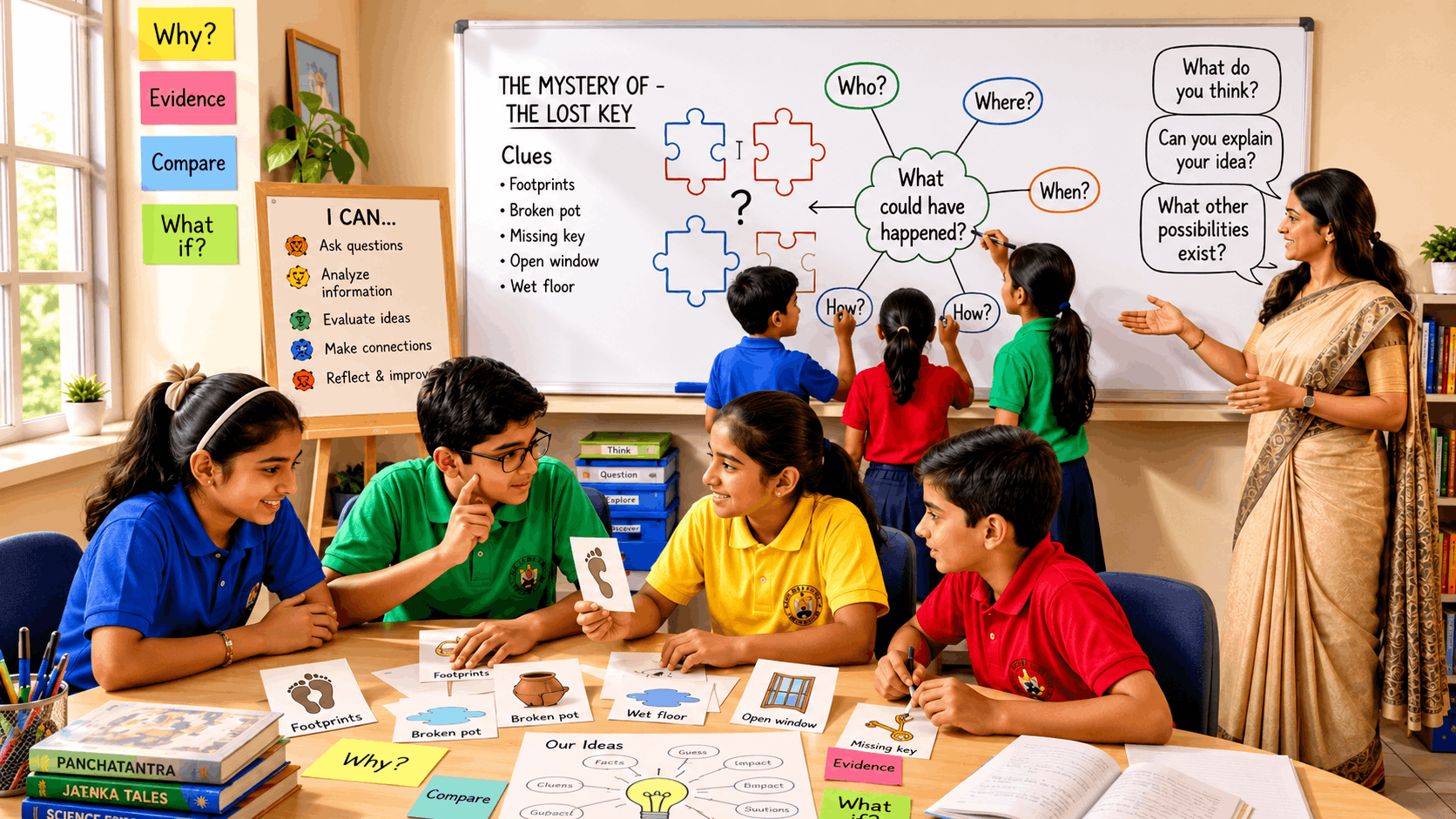
A simple classroom question can open up a far deeper lesson. When a teacher asks why the sky appears blue or whether a viral claim is credible, the exercise goes beyond science; it tests a student’s ability to question, verify, and think independently. That capacity, educators say, defines critical thinking, a skill rapidly gaining urgency in an era shaped by artificial intelligence and information overload.
At its core, critical thinking is the ability to question assumptions, examine evidence, and analyse information before forming conclusions. “It is the ability to pause and question before forming an opinion, and to reflect before responding. It goes beyond the mere accumulation of knowledge. Critical thinking involves analysing information, identifying bias, connecting ideas across contexts, and arriving at reasoned, independent judgements. It is not just an academic skill but a life skill,” said Divya Bhatia, principal, Amity International School, Saket.
She added, “We are moving towards building stronger critical thinking skills, but we are not entirely there yet. India’s education system has made significant progress, particularly with forward-looking reforms such as the National Education Policy 2020, which emphasises inquiry-based and experiential learning. The shift has begun; it now needs consistency and courage.”


It is in this context that the Times Critical Thinking Championship (TCTC) is returning in 2026 with a sharper focus and expanded scale. Conceived as an initiative by The Times of India, inspired by the Times Foundation, the programme positions itself not merely as a competition but as a structured intervention aimed at embedding critical thinking into school education.
For school students, the skill extends beyond textbook learning. It involves questioning the reliability of information, analysing competing claims, identifying bias, and forming independent judgements. In an ecosystem where digital platforms and AI tools are reshaping how knowledge is created and consumed, these abilities are becoming central to meaningful learning outcomes.
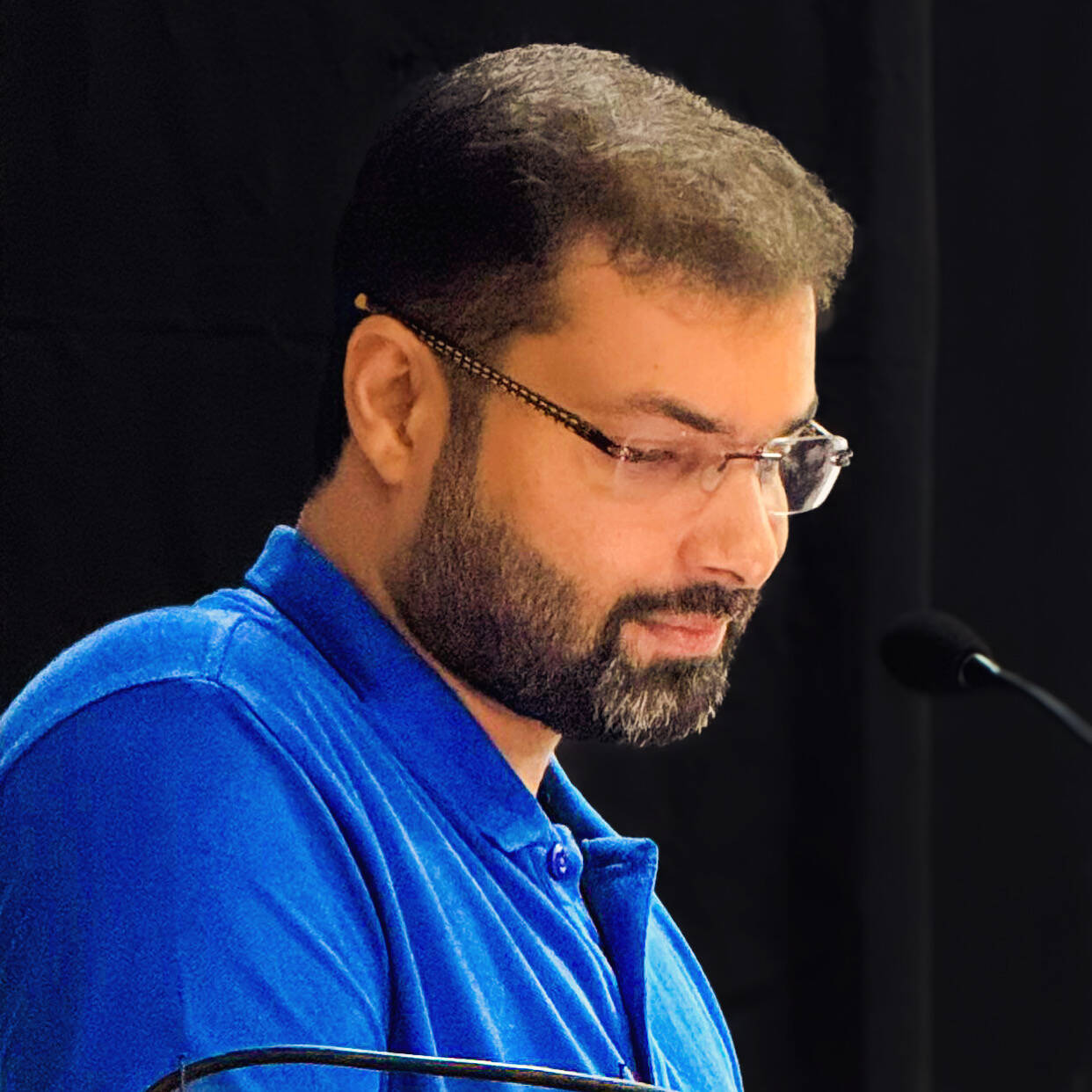
Professor Manabendra Saharia, associate faculty, Yardi School of Artificial Intelligence, IIT Delhi, said: “Critical thinking is the ability to question, evaluate evidence, and not accept things at face value. Today, we have more information than ever before, but less patience to examine it. With popular AI tools, it is going to be a challenge for students to develop critical thinking at an early age. The only way to really develop it as an essential skill is to read widely from a young age and be open-minded about opposing ideas in all aspects of life.”
The scale of participation reflects growing traction. In its inaugural 2025 edition, the championship saw around 2 lakh students from 5,000 schools across 25 cities. More than 5,000 teachers were also trained in pedagogical approaches that emphasise inquiry, creativity, and problem-solving. The programme builds on the wider outreach of Teach India initiatives, which have demonstrated the feasibility of large-scale classroom interventions.
According to impact catalyst Aruna Goenka, co-chair of the TCTC National Advisory Board, fostering reflective inquiry early can shape long-term outcomes. “It leads to intellectual confidence and grit, contributing to better academic outcomes, enhanced communication abilities, and stronger decision-making in everyday life,” she said.
Building on its first edition, TCTC 2026 aims to reach one million students nationwide. The expansion aligns with a broader recognition that in an AI-driven world, knowledge alone is insufficient; the ability to interpret, question, and apply it meaningfully is what will define future readiness.
For educators and organisers, the objective is clear: ensuring that classrooms produce not just informed students, but thinking individuals equipped to navigate complexity.
What Is Critical Thinking?
The ability to question, analyse, and decide using logic and evidence
- Think logically | Use facts to form reasoned conclusions
- Question information | Ask: Is it true, and who is the source?
- Verify evidence | Check data, sources, and credibility
- Spot bias | Identify when opinions distort facts
- Consider multiple views | Weigh different perspectives
- Decide rationally | Base choices on logic, not assumptions
- Stay adaptable | Revise views when new evidence emerges
What TCTC will assess
What the test actually measures:
- Fact vs Opinion
• Correlation vs Causation
• Problem Identification
• Assumptions & Inferences
• Argument Evaluation
Who can participate
Students from Classes III to XII
TIER I | Classes III–V
TIER II | Classes VI–VIII
TIER III | Classes IX–XII
The competition will be open pan-India, covering 28 states & 8 UTs
Selection process
May | Registration opens
May-July | Round 1 – Written test
June-Aug | Round 2 – Video interview with Master Trainers
Aug | Final shortlist announced
Sept | National semi-final & National final
How to apply
Visit www.toitctc.com or scan the code below to know more and register for the championship.


Disclaimer
Views expressed above are the author’s own.
END OF ARTICLE