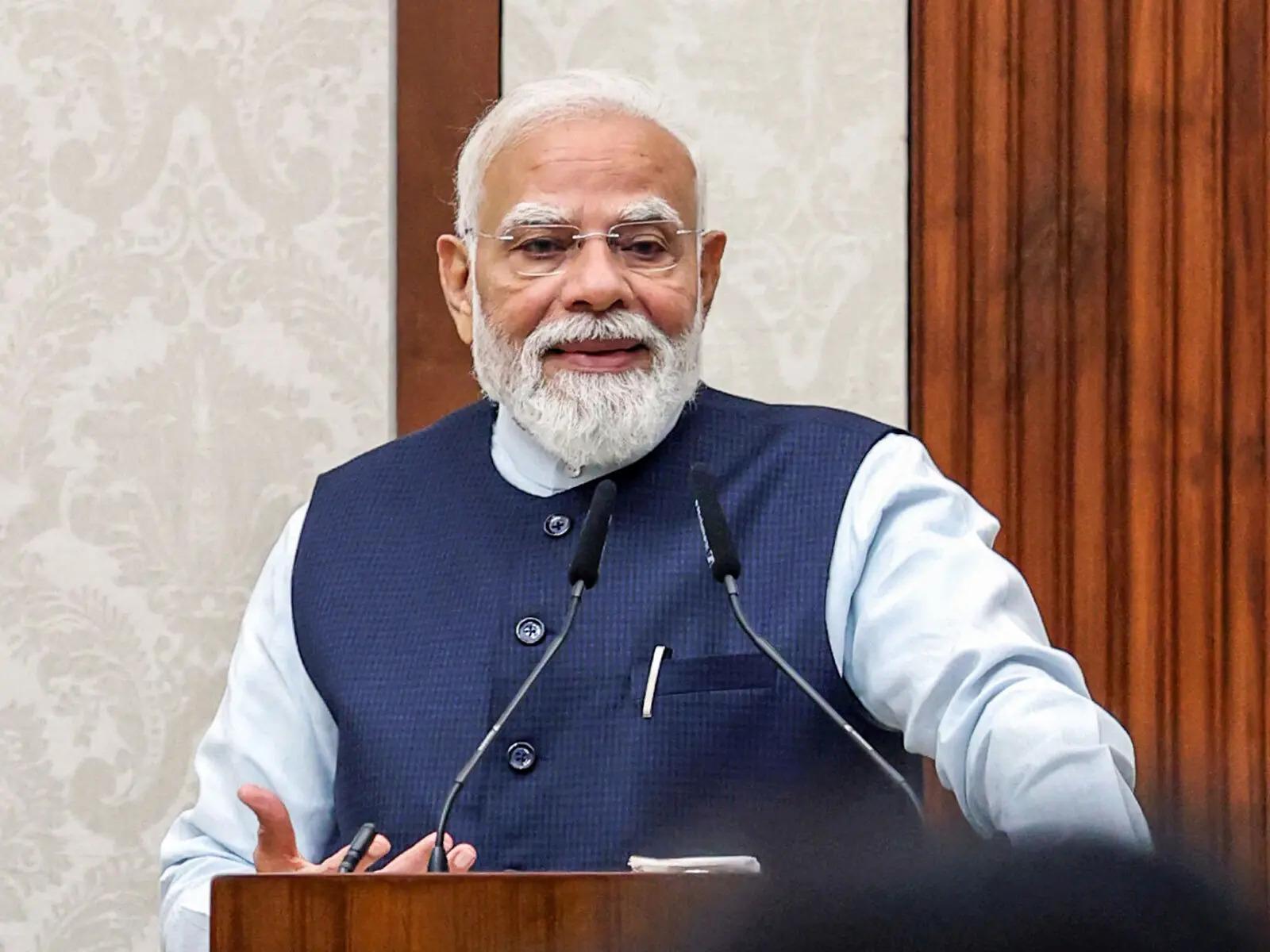
The Honourable Prime Minister of India Shri Narendra Modi will be travelling to Indonesia on a State visit on the 7th and 8th of July. This will be his fourth visit to Indonesia and the first bilateral visit since the elevation of India-Indonesia ties to a Comprehensive Strategic Partnership in May 2018. The Prime Minister will also be visiting the famous Prambanan Temple in Yogyakarta, which is the finest symbol of the sharing of culture between the two countries. This will greatly highlight the people-to-people relationship and historic connections between the citizens of India and Indonesia.


Indonesia has emerged as the second largest trading partner of India in the ASEAN region. Entire gamut of bilateral cooperation including political, defence and security cooperation, trade and investment, healthcare and pharmaceuticals, digital technologies, critical minerals and rare earths, culture, connectivity, tourism and people-to-people relations will be reviewed during this visit of the Honourable Prime Minister of India.
India and Indonesia are close maritime neighbours with cultural and trade ties going back to 2,000 years ago. The annual Bali Jatra festival which is celebrated in Odisha, commemorates the historic voyages by Indian seafarers who would set sail to Bali. The beautiful relief of the 8th -9th century at the Borobudur Stupa in Indonesia depicts the kind of ocean-going ships that would have travelled between the two countries then. It is well known that the great Buddhist teacher Dipankara Srijana (Atisa) studied at the Nalanda University and then went for further studies to a Buddhist University in Indonesia. In the First Millennium, Chinese pilgrims travelling to India used to stop over in Indonesia, where often they also learnt Sanskrit. The eminent Indian Buddhist teacher Bodhidharma of the 6th century would have taught in Indonesia, before he travelled on to Vietnam and then to China, where he established Dhyana or Chan Buddhism. These are just a few examples of the cultural sharing between India and Indonesia over the centuries. This is reflected till today when you visit the Embassy of Indonesia in Washington DC, where you are first greeted by a large statue of Saraswati, the deity of education and artistic inspiration.
The Parmanand Temple (widely known as Prambanan) was originally built in the 9th century (around 850 CE) during the reign of King Rakai Pikatan of the Sanjaya Dynasty in Java, Indonesia.
It was later expanded by subsequent kings and is today a UNESCO World Heritage Site.
The Ramayana Ballet at the Prambanan Temple, located 17 km northeast of Yogyakarta, Indonesia, is a spectacular traditional performance. It brings the Hindu epic to life with over 200 professional dancers and gamelan musicians against the backdrop of the illuminated temples. The epic story is performed over 150 times every year and keeps the grand tradition alive.
The Parmanand Temple also has exquisite sculptural relief depicting the story of the Ramayana. In terms of the quality of the art, this is one of the finest depictions of the Ramayana story anywhere in the world.
Archaeological remains in Indonesia have confirmed close interactions with India which existed over 2,000 years ago. Hinduism existed here in early times and Buddhism flourished from the 7th century CE onwards. Till today, the great epic of ethics the Ramayana is a most important cultural tradition in Indonesia. It may have arrived here by the 5th century CE.
In the 8th and 9th centuries CE, magnificent Buddhist monuments were constructed in Java. Not very far from the Parmanand Temple, the Borobudur Stupa was built by the Sailendra kings in this period. It is one of the world’s most magnificent Buddhist monuments. It is the tallest stupa standing in the world today. There are many thousands of feet of very fine relief, which we see as we climb upwards and go around the stupa.
The lowest level of the relief presents the life of passions in the world: the kamadhatu. The next level above that presents the karmadhatu, showing how we can improve our lot through virtuous actions. The next two levels present us the rupadhatu, the personification of enlightenment, through the life of Gautama Buddha. We see the Lalitvistara, the drama of the life of the Buddha. Here, we see scenes from his life and the Jataka stories. Finally, we go upward still, through the gateway of Kala, or ‘Time’. Leaving behind time itself, we approach the final truth, the arupadhatu, that which is without form. Here, at the highest point of the ascent, it is the stupa itself which is before us.
Disclaimer
Views expressed above are the author’s own.