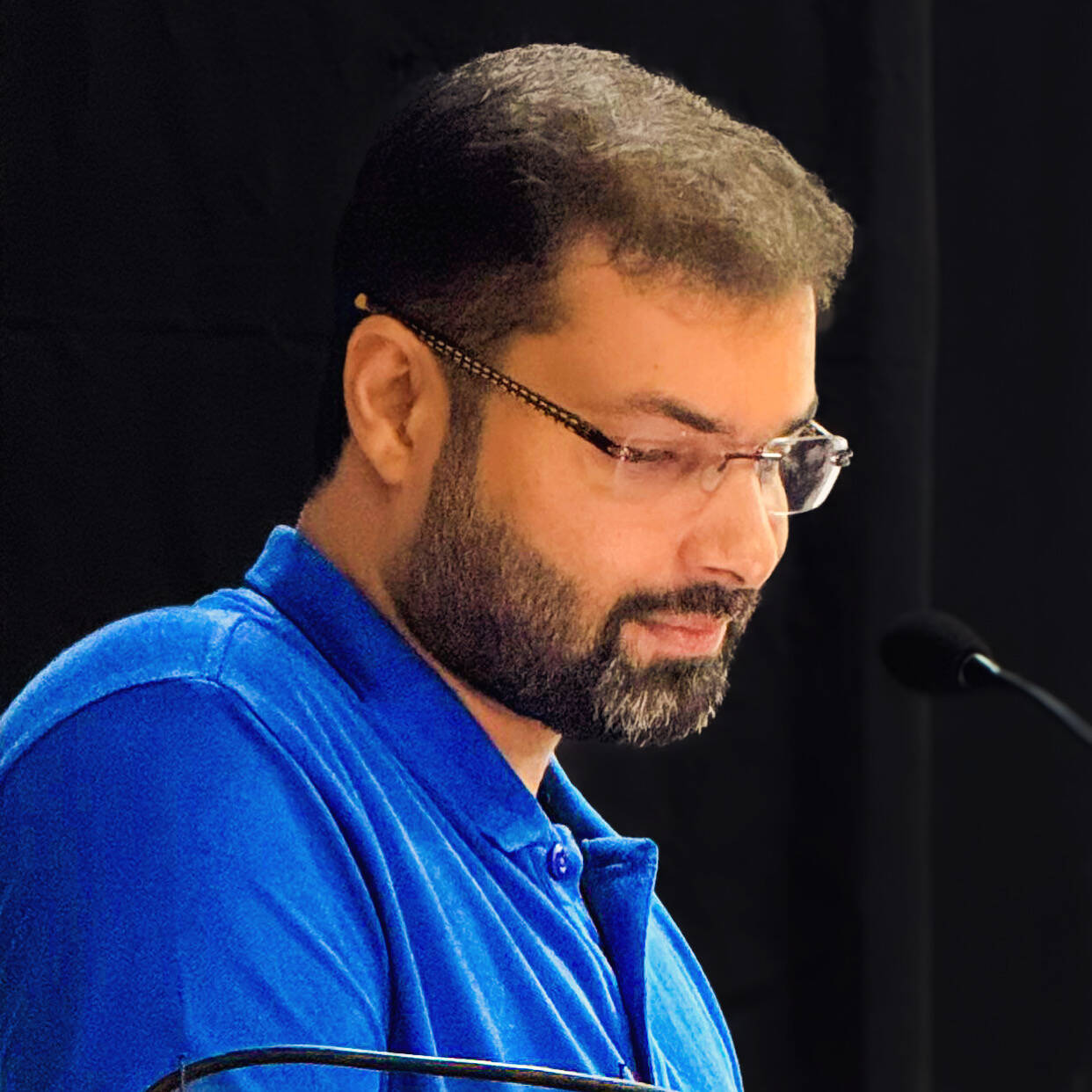
Prakhar was, by all visible measures, a successful man. He spoke well, dressed impeccably, and never missed an opportunity to remind others of his accomplishments. Every conversation with him seemed to circle back to him—his achievements, his opinions, his superiority. If someone else attempted to share a personal milestone or joy, Prakhar would either interrupt or dismiss it with a subtle air of indifference. Listening was never his strength; admiration was his expectation.
At first, people tolerated him. Friends laughed politely, colleagues nodded in agreement, and acquaintances gave him their time. But over the years, something began to shift. Invitations grew fewer.
Conversations became shorter. Messages went unanswered. The same people who once surrounded him now started avoiding his company. What Prakhar perceived as admiration had, in reality, been mere courtesy and it had quietly worn thin.
This gradual distancing puzzled and disturbed him. He could not comprehend why people no longer sought his presence. The silence that followed him was unfamiliar and deeply unsettling. Slowly, without quite realizing it, Prakhar found himself alone , almost ostracised ,socially isolated, emotionally disconnected, and inwardly restless.
Ego, when unchecked, has a peculiar way of isolating individuals. It builds invisible walls, convincing one of their own grandeur while simultaneously pushing others away. An inflated sense of the self , often blinds a person to the emotional needs, achievements, and worth of others. It is this ill – mannered , fat, relentless ego that pushes itself ahead of others for satiating its own vested interests.
Relationships, however, thrive on mutual respect, empathy, and genuine interest. When these are replaced by self-obsession, bonds begin to erode.
In Prakhar’s case, loneliness became a mirror he could no longer avoid. It reflected not just his isolation, but also the habits and attitudes that had led him there.
It was during this phase of quiet introspection that he happened to meet a spiritually enlightened individual , someone whose calm presence and gentle wisdom left a deep impression on him. Unlike others, this person did not react to Prakhar’s boasting, nor did he criticize him harshly. Instead, he listened, observed, and gradually guided Prakhar towards self-awareness.
He spoke to Prakhar about the subtle burden of ego and how it weighs down the spirit obstructing genuine happiness. He encouraged him to reconnect with himself through the finer aspects of life: music that soothes the soul, painting that expresses unspoken emotions, writing that reflects inner truth. He also advised him to practice meditation under the guidance of a trained yogic teacher, to quiet the restless mind and observe his own thoughts without judgment.
Prakhar , perhaps for the first time, chose to listen . Introspection helped him to consciously evade self- absorption . Soon this rekindled his love for music which further soothed his mind.
Although the journey was not immediate or effortless there was a noticeable behavioral change in him.
Letting go of ego is rarely a sudden transformation; it is a gradual unfolding. As Prakhar immersed himself in music and creative expression, he discovered a different kind of joy that did not depend on validation or applause. Meditation taught him patience, awareness, and humility. Slowly, the constant urge to prove himself began to fade.
The novelist and philosopher , Irish Murdoch in her book , ‘The Sovereignity of Good’ ‘ referred to this as “unselfing ” , a meditative process which is engaging and alleviates the cumbersome baggage of self obsession.
What replaces it is something far more profound.
This is what gradually dawned on Prakhar , slowly transforming him . He began to notice others, their stories, their struggles, their achievements. He learned to listen without interruption, to appreciate without comparison, and to respond with warmth rather than dominance. The burden he had unknowingly carried for years began to lift. In its place emerged a sense of lightness, authenticity, and connection.
People, too, noticed the change.
Where once there had been distance, there was now warmth. Where there had been avoidance, there was now welcome. Prakhar’s smile, once rare and self-assured, became genuine and inviting. Conversations with him turned meaningful, not monologues but shared experiences. Over time, he found himself surrounded by people once again , not because he demanded attention, but because he offered presence.
Ego, in its excess, isolates; humility, in its quiet strength, connects.
Well placed humility earns respect .
Prakhar’s story is not uncommon. Many individuals, often unknowingly, carry this invisible weight of self-importance, believing it to be a sign of confidence or success. But in reality, it creates emotional distance and leaves one disconnected from the very relationships that enrich life.The transformation lies not in rejecting oneself, but in refining one’s awareness and shifting from self-centeredness to shared humanity. When we release the need to constantly assert our importance, we create space for understanding, compassion, and genuine connection.
Prakhar did not lose his identity; he rediscovered it as he gradually got free from the burden of ego. And in doing so, he gained something far more valuable than admiration : he earned affection, respect, and the joy of truly belonging.
His journey comes full circle , from a man surrounded by people yet deeply alone, to someone who, by shedding his ego, became both connected and complete.
Indubitably that is what makes unselfing not a loss, but a quiet gain.
Unselfing the ego is not about grand gestures or dramatic renunciations. It is about these small, almost invisible choices we make each day. To step back instead of forward. To listen instead of assert. To release instead of cling.
And in doing so, we may discover that what we thought was the self was often just a story we had been telling ourselves all along ,and that, beyond it lies a quieter, more expansive way of being , that of being humble.
Humility is not thinking less of yourself but thinking of yourself less for it carries greatness with gentleness.
Disclaimer
Views expressed above are the author’s own.
END OF ARTICLE