Scientists can make a cell from scratch now. That’s a useful tech for solving many global problems
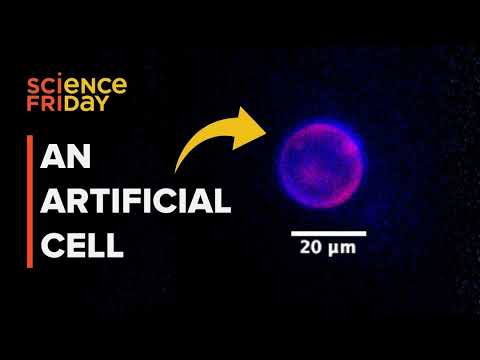
Nature took more than 500mn years to make the first cell, and a few billion to arrive at intelligence thereafter. But we humans have cobbled together both in fewer than 50. Of AI we needn’t say more, but news from University of Minnesota, about world’s first totally synthetic cells, is exciting. It questions the belief that life is more than molecules plus energy. But looks like there’s no secret sauce, no supernatural hand.
Sceptics may roll their eyes. It’s true that, despite all the hype, AI is not really “intelligent” but only a statistical trick. And yes, the lead scientist on the synthetic cell team has said she’s “hesitant to call this ‘alive’”. But hesitation only shows she doesn’t want to oversell her team’s achievement, unlike AI bros. The SpudCells they have made fulfil all three conditions to be considered alive – feeding, growing and replicating. What’s the catch? The cells can’t produce their own ribosomes or components that make proteins.
That’s alright. Now that the project is growing into a multi-lab collaboration, more ‘accomplished’ cells will be made. It’s a good thing that the Minnesota team decided not to patent their tech, so that others can develop it too. In May, six Asian countries – China, Japan, S Korea, Singapore, Thailand, Malaysia – had announced their own 10-year joint programme to build synthetic cells, and one of its goals is to achieve “ribosome autonomy”. West and East should work together on this, setting aside geopolitics for the greater good.
How do we know artificial life won’t prove harmful? When the late Craig Venter announced his intention to make a synthetic cell, in 1999, he was accused of playing Frankenstein. A few years earlier, Roslin Institute’s scientists had faced the same charge over cloning Dolly the sheep. While fear of the unknown is natural, we can’t turn our back on scientific frontiers. Once we master the tech of designing cells with specific traits, like turning atmospheric carbon dioxide and water vapour into ethanol, global warming and fossil fuels will become history. It’s far easier than finding a microbe to do this among the billions made by nature.
Venter’s team had created a synthetic cell based on a natural bacterium. Sixteen years later, Minnesota scientists have made a cell from scratch. That’s steady progress. With AI, the next decade is likely to be even more fruitful. A new cellular age is starting.

https://www.nytimes.com/interactive/2026/07/01/science/spudcells-synthetic-cell.html
https://www.theguardian.com/science/2010/may/20/craig-venter-synthetic-life-form
Disclaimer
Views expressed above are the author’s own.