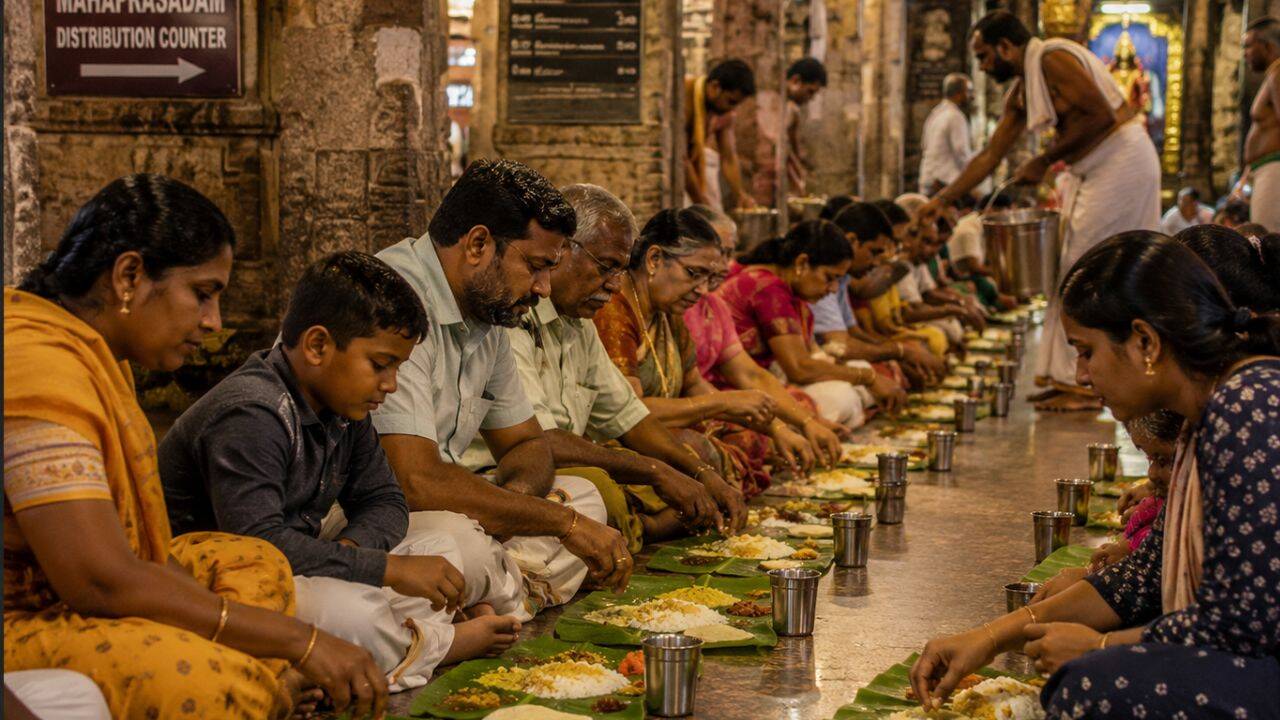


Temple food holds a deeply significant place in Indian culture, extending far beyond nourishment. Across centuries, food offered in temples has symbolized devotion, gratitude, purity, and community. Whether it is the sacred prasad distributed after prayers, the grand langars of Sikh gurudwaras, or the traditional bhog prepared during festivals, temple food carries spiritual and emotional meaning that connects people across generations. Prepared with discipline, simplicity, and reverence, temple food reflects the philosophy that cooking itself can be an act of worship. Many traditional recipes followed in temples today have remained unchanged for hundreds of years, preserving regional culinary heritage and ancient food practices. Beyond religion, temple food also represents equality and togetherness, where people from all walks of life sit and eat together without distinction. In many Indian households, the flavors of temple food evoke nostalgia, comfort, and faith. Dishes like khichdi, pongal, sheera, panchamrit, and mahaprasad are remembered not only for their taste but for the emotions and rituals attached to them.

Read more at: 7 ancient temple dishes that have survived for centuries
Paysam

Payasam holds a special place in Indian temple traditions and is considered one of the most sacred offerings made to deities across many regions of India. Prepared with ingredients like rice, milk, jaggery, ghee, and cardamom, Payasam symbolizes purity, prosperity, and devotion. It is commonly served as prasadam during festivals, religious ceremonies, and temple rituals, especially in South Indian temples. Beyond its sweet taste, Payasam carries deep emotional and spiritual value for devotees. Its preparation often follows age-old traditions, reflecting faith, gratitude, and community bonding, making it an integral part of India’s rich temple food culture.
Read full article: Exploring the humble dessert of Onam Sadya
Kadha Prasad

Kadha Prasad holds immense spiritual and cultural significance in Sikhism and is considered a sacred offering served in every Gurudwara. Made with simple ingredients such as wheat flour, ghee, sugar, and water, Kadha Prasad symbolizes equality, humility, and divine blessings. It is prepared with devotion and served to all visitors without discrimination, reflecting the Sikh principles of selfless service and community. More than just a sweet dish, Kadha Prasad represents faith, gratitude, and togetherness. Its warmth and simplicity create a deep emotional connection for devotees, making it an integral part of Sikh religious and cultural tradition.
Read full article: The secret recipe of Kadha Prasad
Jagannath Puri’s Maha Prasad

Mahaprasad holds profound spiritual significance in Indian temple traditions and is regarded as food blessed directly by the deity. Most famously associated with the Jagannath Temple, Mahaprasad symbolizes devotion, equality, and divine grace. Prepared using traditional methods and offered during sacred rituals, it is later shared among devotees as a blessing. One of its most remarkable aspects is that people from all communities and social backgrounds sit together to consume it, reflecting unity and inclusiveness. Beyond nourishment, Mahaprasad carries emotional, cultural, and spiritual value, making it an enduring symbol of faith and community in Indian culture.
Read full article: Why Jagannath Temple’s offerings are called Mahaprasad

Disclaimer
Views expressed above are the author’s own.
END OF ARTICLE