In June 1937, addressing Indians in Malaya, Nehru said that India, once independent, could not claim every person of Indian origin as its own. The Indians of Malaya should consider Malaya their land — by adoption or birth — and seek their future there. As the sun was setting on the empire, their Indianness was being separated from citizenship.
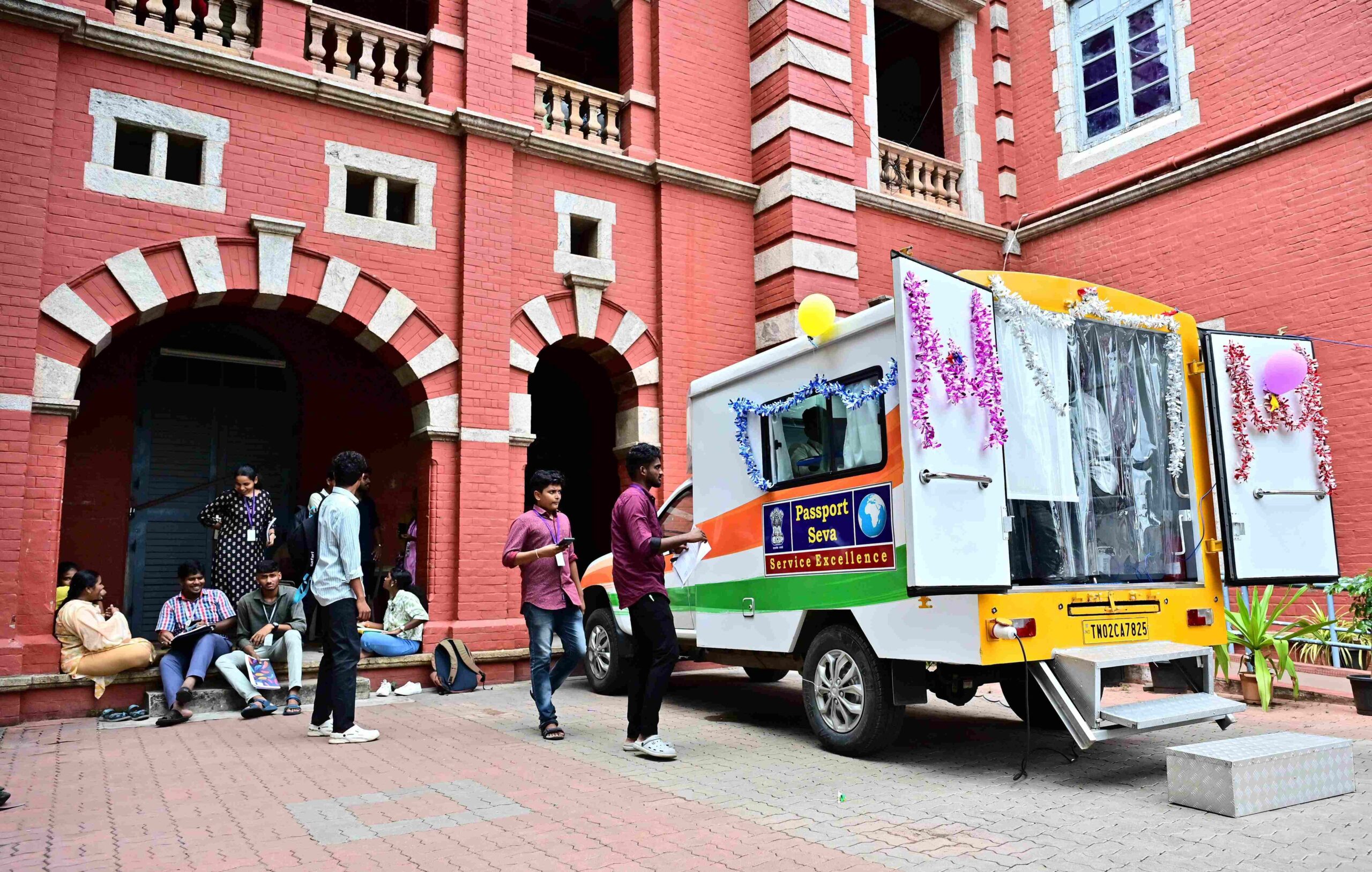
The ministry of external affairs recently reminded Indians at home that this separation has never entirely disappeared. It said a passport is a “travel document and not a conclusive proof of citizenship”, and predictably, all hell broke loose. If a passport is not proof, people asked, then what is? Aadhaar proves identity; PAN places you in the tax system; a ration card gives you access to welfare; a voter ID says you are on an electoral roll — but none of them categorically proves that you are a citizen. The govt pointed out that this had always been the case: under the Passports Act 1967, a passport could even be issued to non-citizens in the public interest. That is true. It is also precisely the problem.


The Indians of Malaya found out the precarity of their citizenship the hard way. Most had not gone there as free individuals making choices. They had been pushed, recruited, contracted or indentured into imperial labour systems — moved across a Bay of Bengal that was, before the colonial borders hardened, a region of continuous movement: Tamils to Burma, families spread across Ceylon, Rangoon, Penang, and Calcutta; traders and plantation workers threading the same waters for generations. Empire moved people when it needed labour. Independence then asked those same people to become citizens of neat new states.
The countries where they landed did not always claim them either, leading many to become “orphans of Empire”. Some ethnic Indians in Malaysia, especially those descended from the old estate economy, still struggle for citizenship because of missing papers, late birth registration, parental status or inherited statelessness. Nearly a century after Nehru’s speech, legal belonging remains unfinished. This is not a digression about the diaspora. It is the original version of the question that India, like other postcolonial states, has never fully settled: who belongs here, and how do you prove it?
What’s more troubling is that the spectre haunting Indian citizenship is not just the foreigner outside the border but the potential foreigner within — someone born in the country, taxed by it, documented by it for decades, and yet remaining available to doubt. That doubt was baked into independence itself. Newly independent India could not extend citizenship to every person connected to it by ancestry, labour, language or memory; it had just witnessed the horrors of Partition, and had poverty and food shortages to manage, as well as sovereignty to protect. And so, citizenship became territorial, but it never became complete. Belonging became a matter of paperwork, and the paperwork was never quite enough.
Even citizenship by birth under the Citizenship Act of 1955 has progressively narrowed. Before 1987, birth on Indian soil was largely sufficient; from 1987, at least one Indian citizen parent was required; after the 2003 amendment, either both parents had to be citizens, or one had to be a citizen and the other not an illegal migrant at the time of birth. The file of the parents had entered the cradle.
India also does not issue a universal citizenship certificate. No single piece of paper we can pull from a drawer and say: here is the document that proves the State cannot doubt me. The govt has identified the ambiguity without offering to resolve it. This ambiguity has real consequences. Under the Foreigners Act, when a question arises about whether someone is a foreigner, the onus of proving they are not lies on that person — not on the State to prove they are. In practice, citizenship becomes case-by-case and document-by-document. The state may issue you papers for decades and still reserve the right to ask whether those papers add up.
That is not how a republic should work. It must tell its people what documents create a presumption of citizenship; when that presumption can be challenged; who can challenge it; and what protection the citizen has when the challenge comes. These are not abstract constitutional questions. They are the difference between belonging and being tolerated.
It cannot say that Aadhaar is not enough, that PAN is not enough, that a voter ID is not enough, that a passport is not enough — and then refuse to say what is. A republic cannot run on negative proof alone.
Until India decides to answer it, we will remain Schrödinger’s citizens, citizens and not citizens at the same time, waiting for the right official to open the box of our documents and tell us what we are.
Sanzagiri is a London-based consultant currently writing a literary travelogue on India